
+32%
More revenue growth at design-led companies over five years.
 The Business Value of Design
 Sprint design studio for founders
A full brand and a converting website, built in a month. Delivered as a system your AI can read, so you or your team keep shipping new pages and ads on-brand.
15-min call, no pitch. Just your scope and a number.
AI gets you online for €20. It can't make anyone care once they land there.
A brand your AI can read, so every page you build comes out looking like a company worth taking seriously.
More revenue growth at design-led companies over five years.
The Business Value of Design
Trust a brand less once they spot obvious AI content. Only 7% trust it more.

 Reported · 2026
Of US consumers would rather buy from a brand that skips generative AI in customer-facing content.
 Reported · via Klaviyo
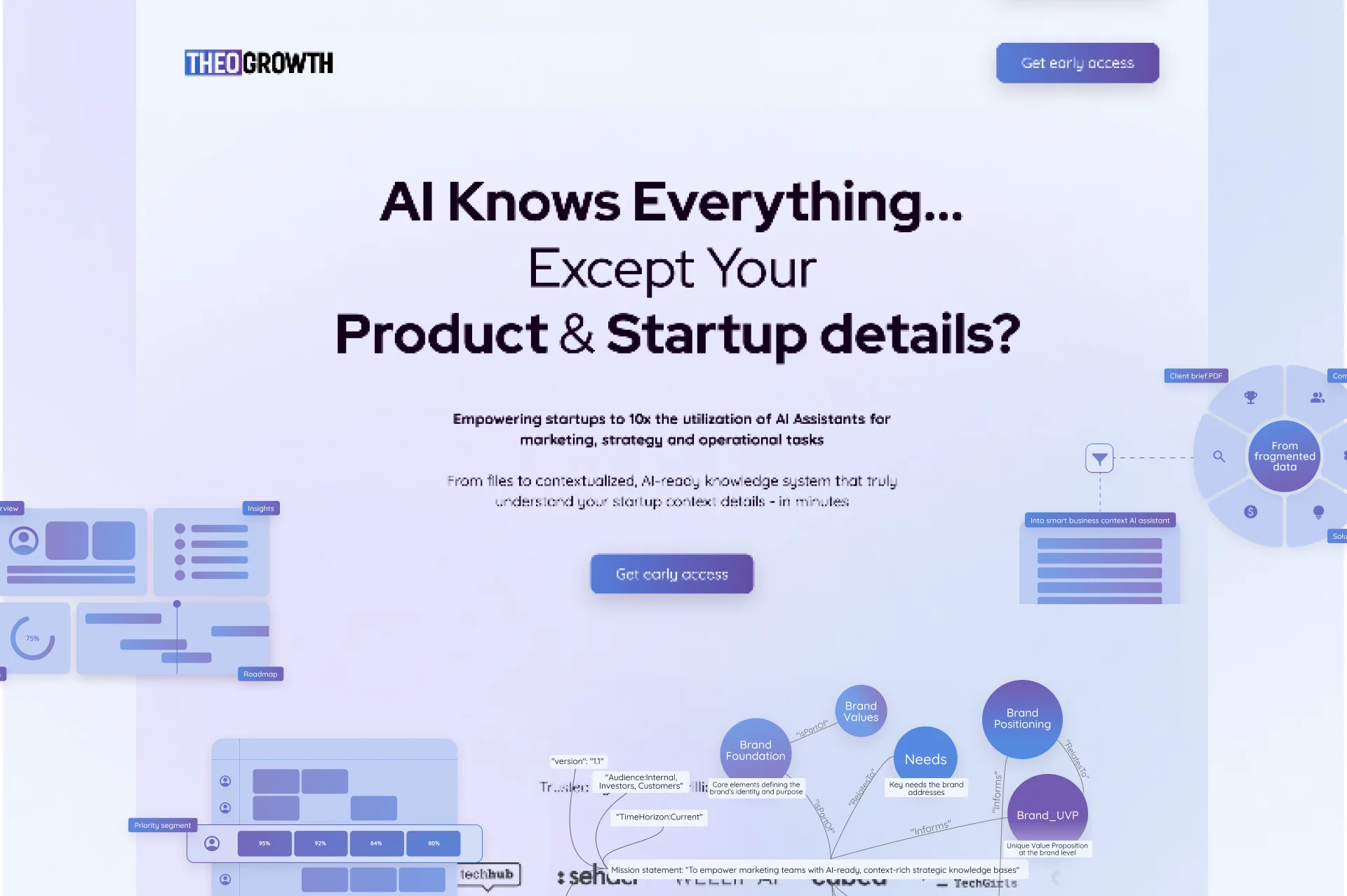
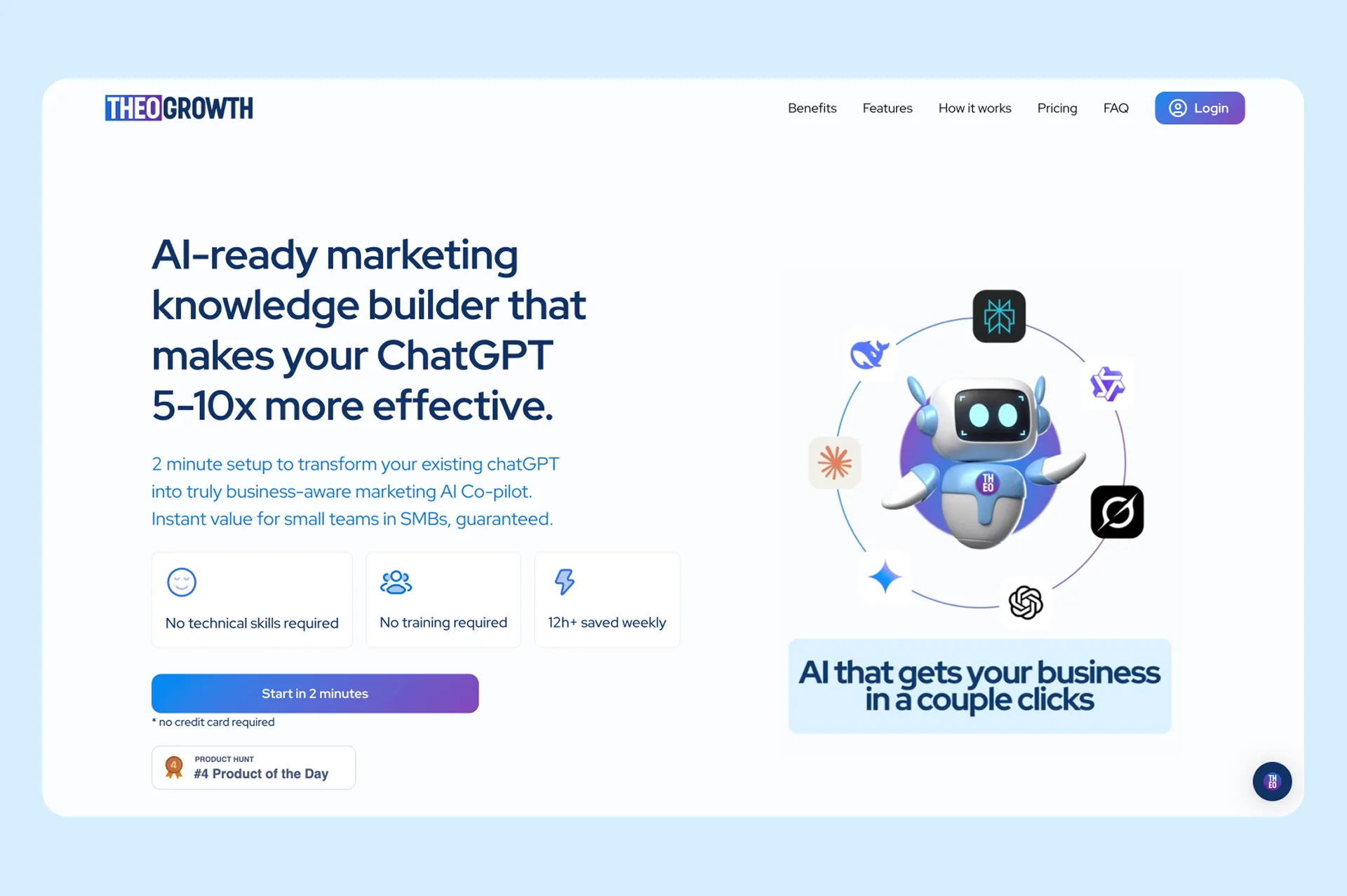
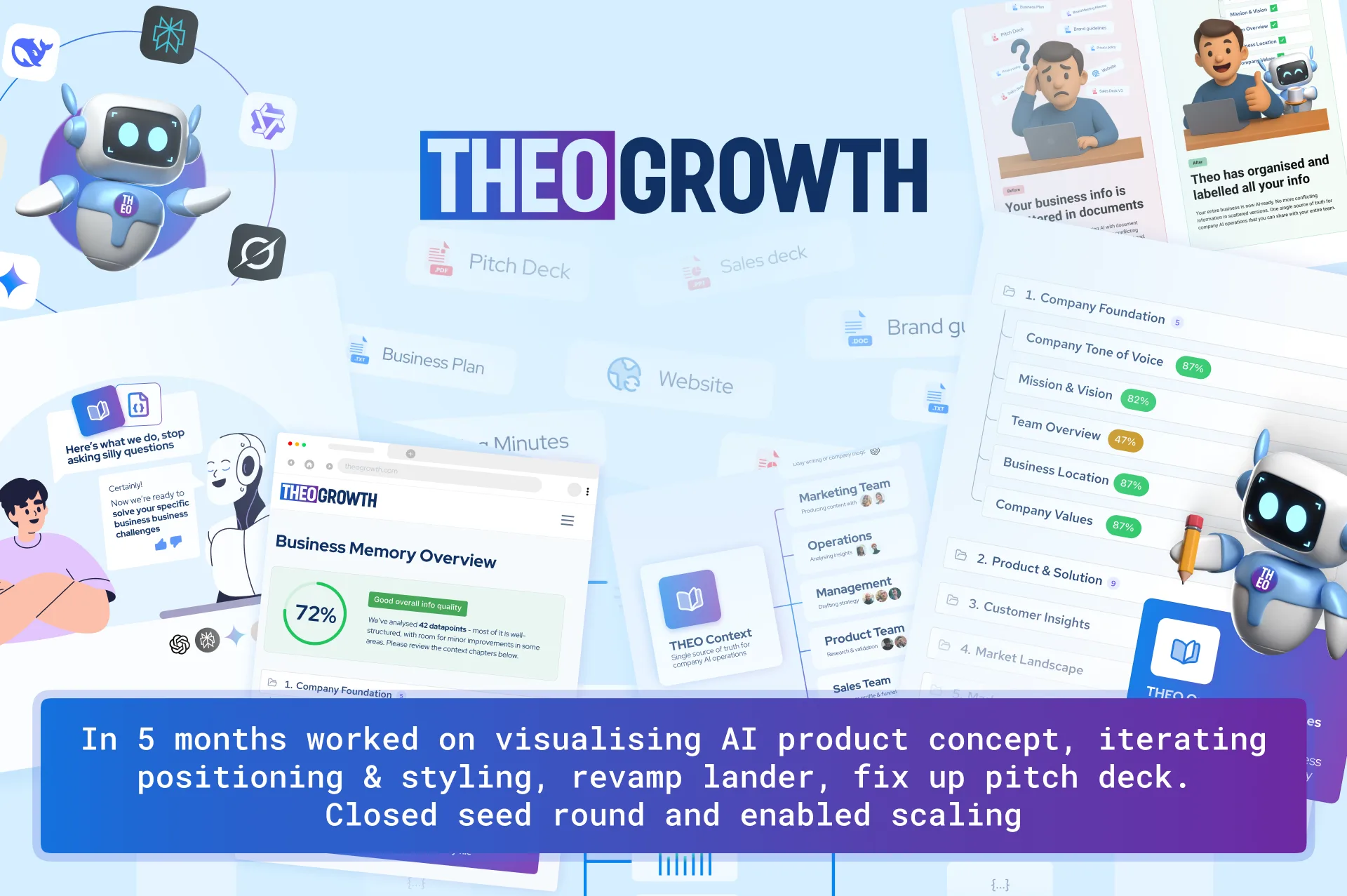
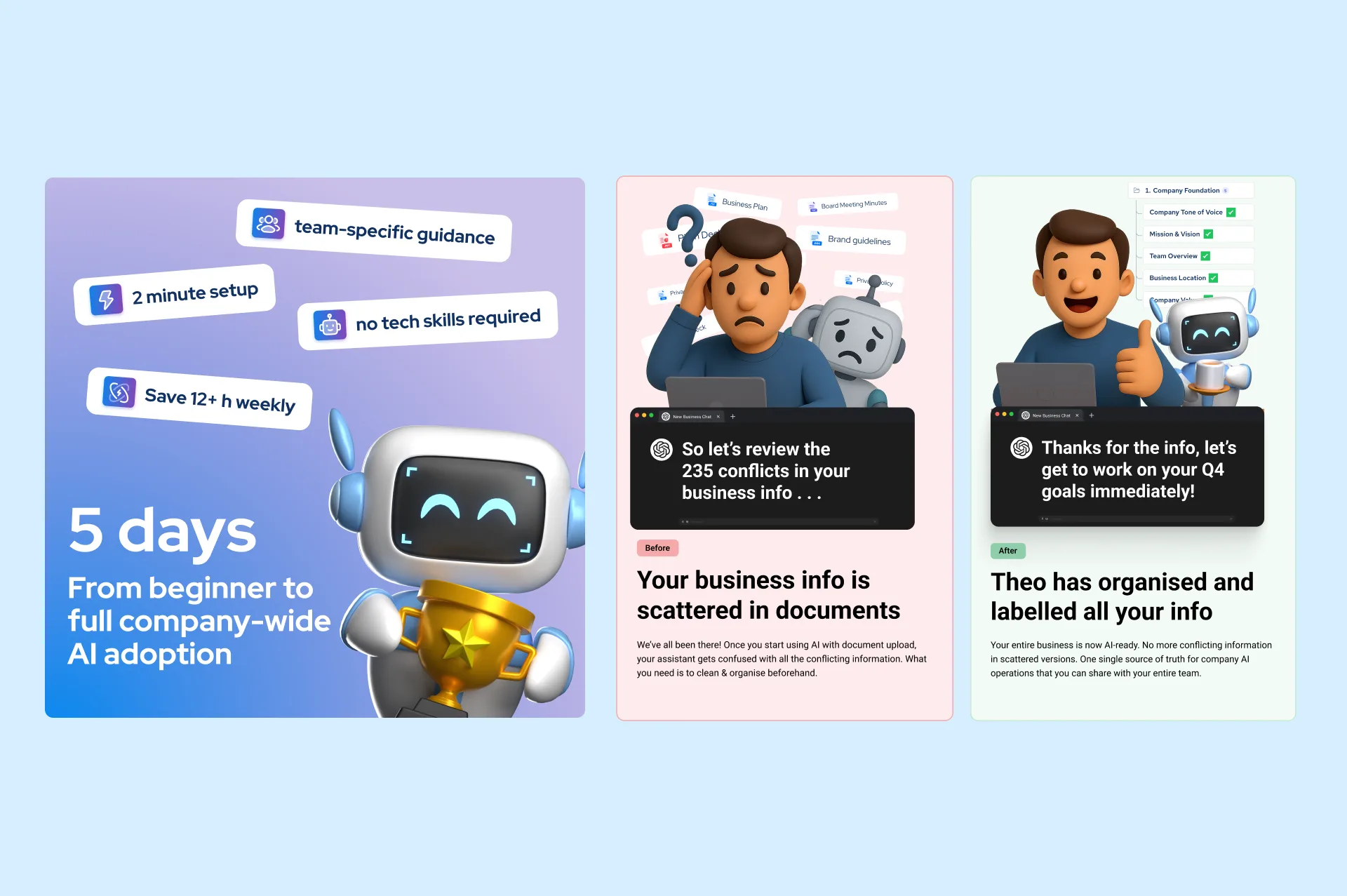
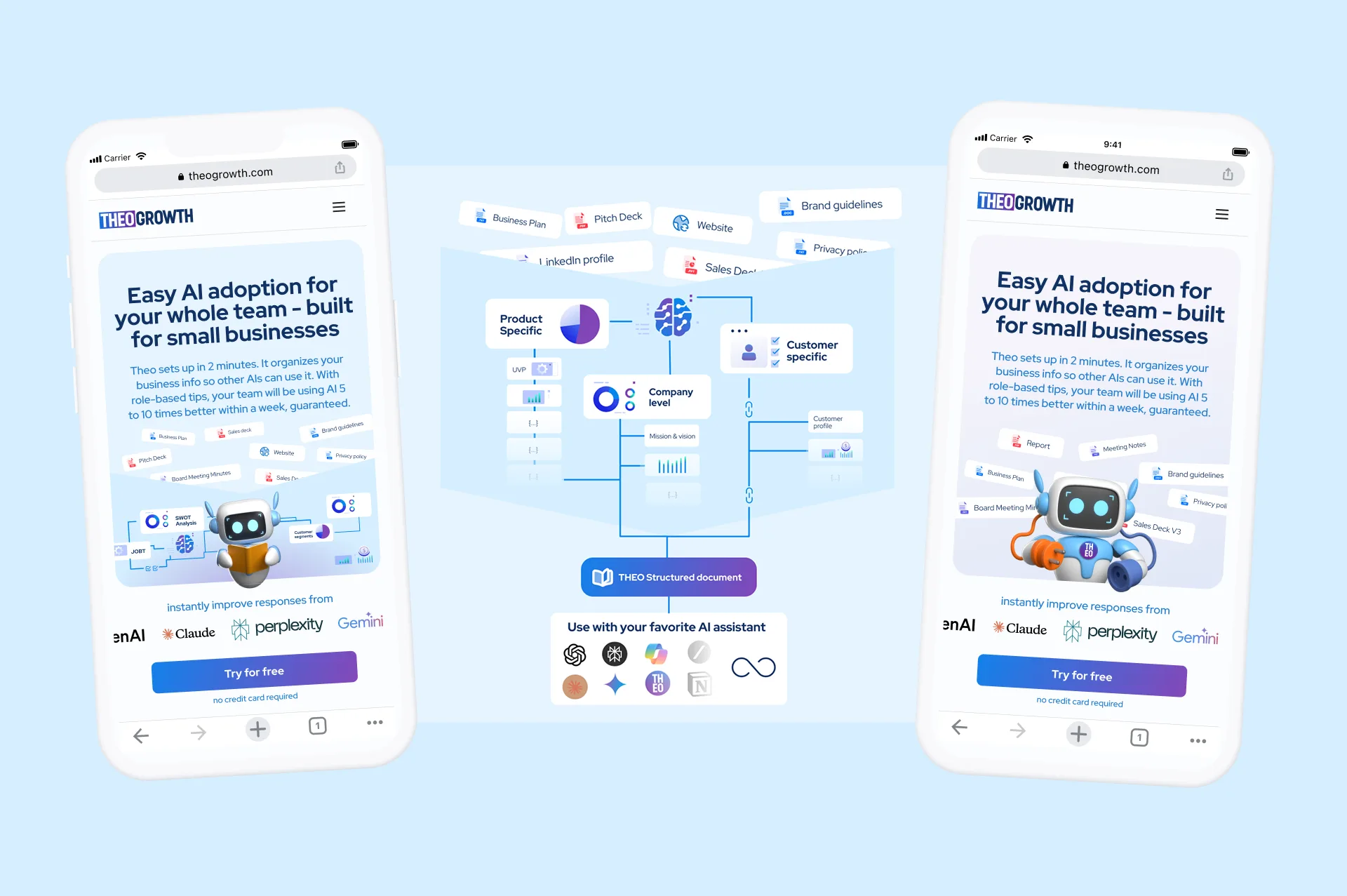
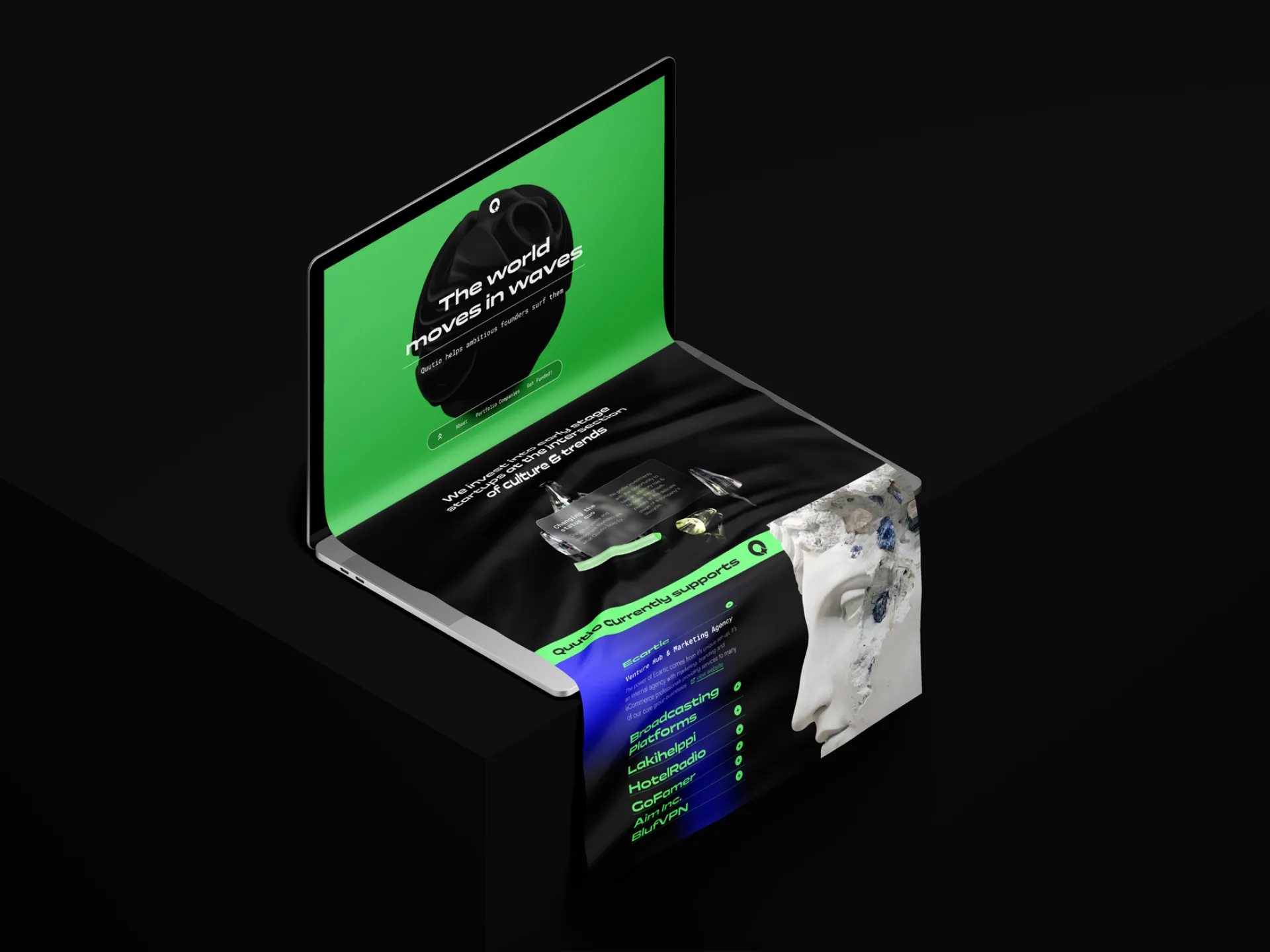
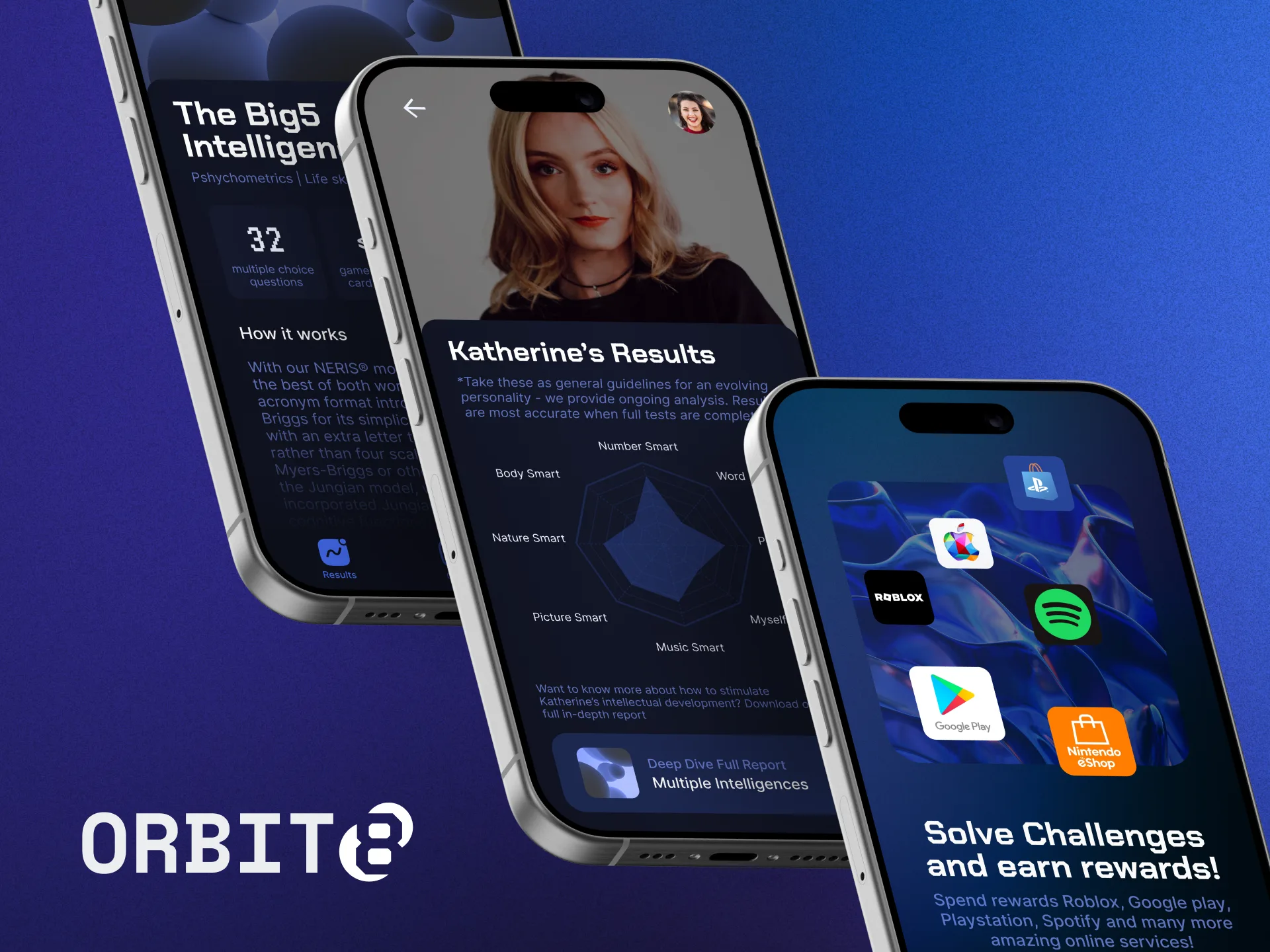
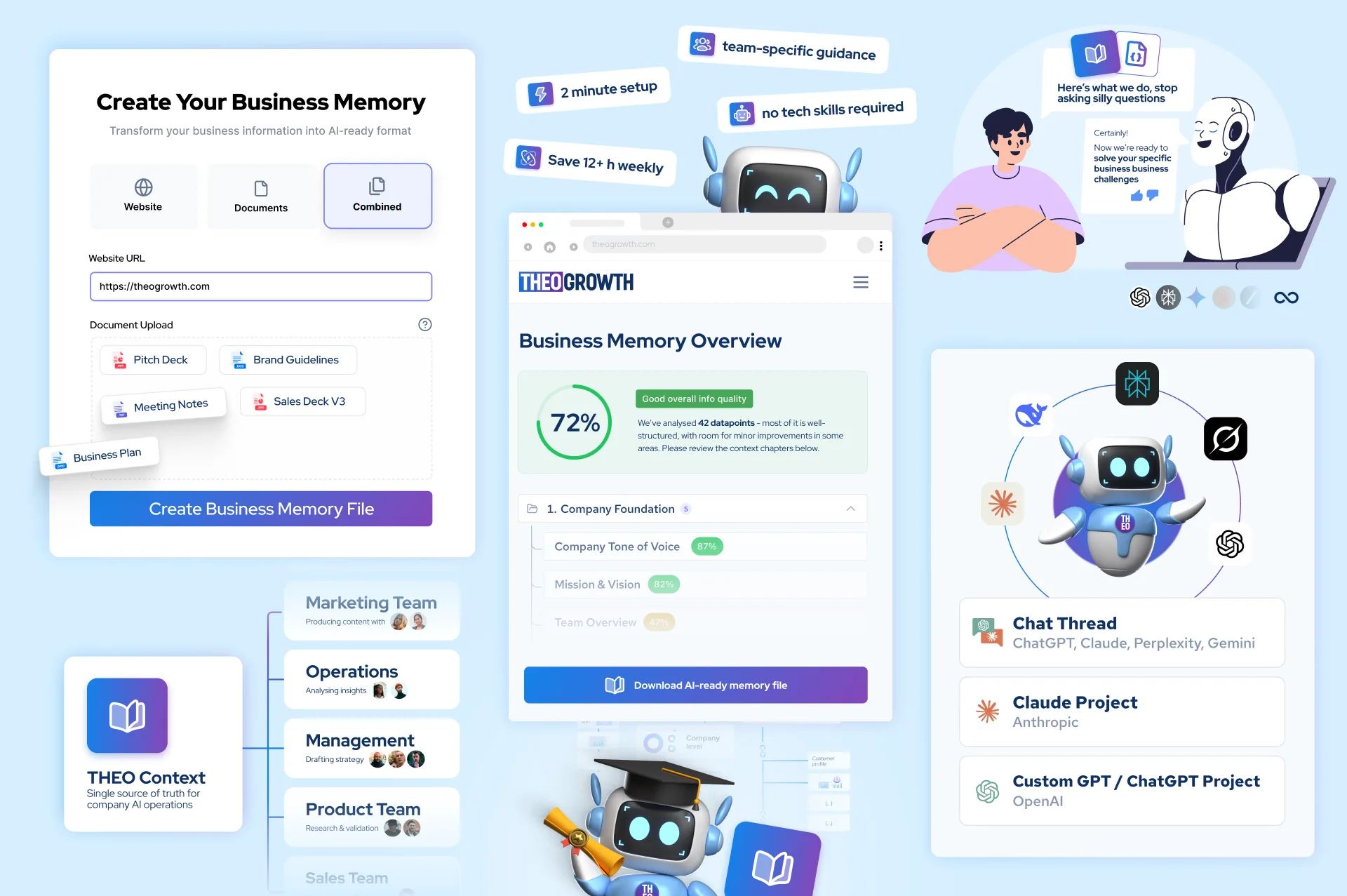
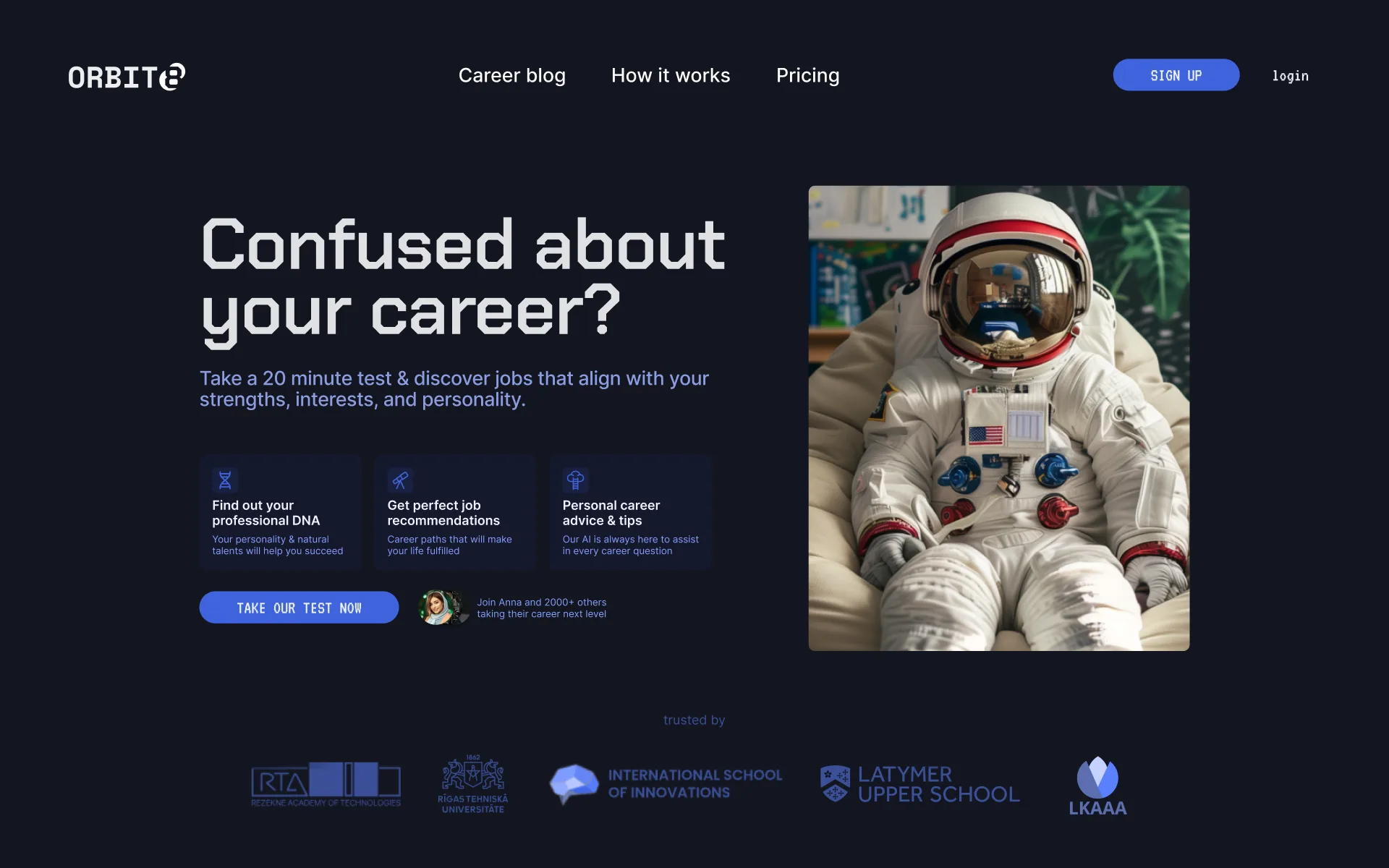
Theo went from a site full of text, purple gradients, and process diagrams to a full visual language — one that gets customers excited to try the product.
Since then: Theo closed its funding round and won TechChill's 50 Founders pitch battle.
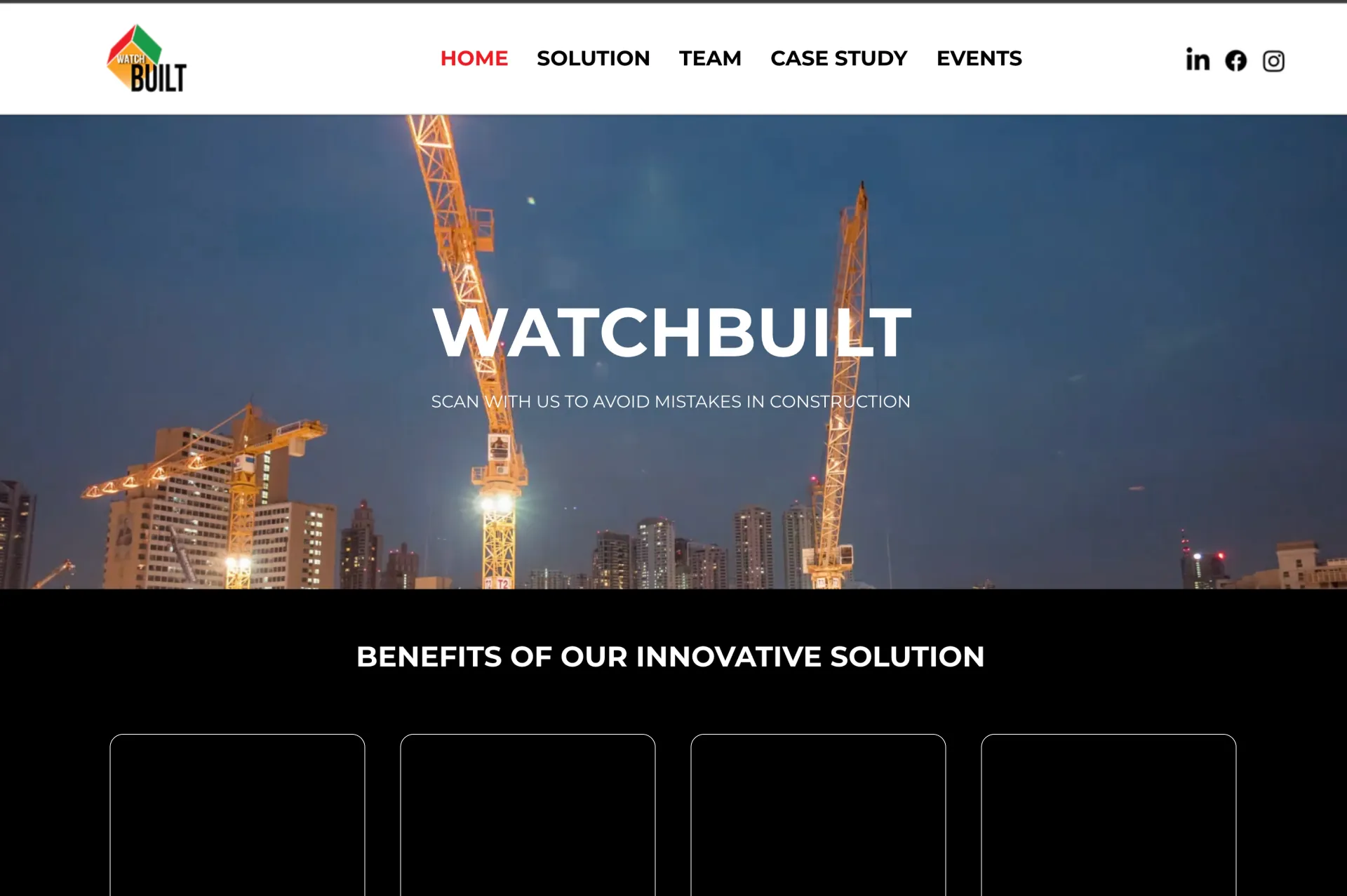
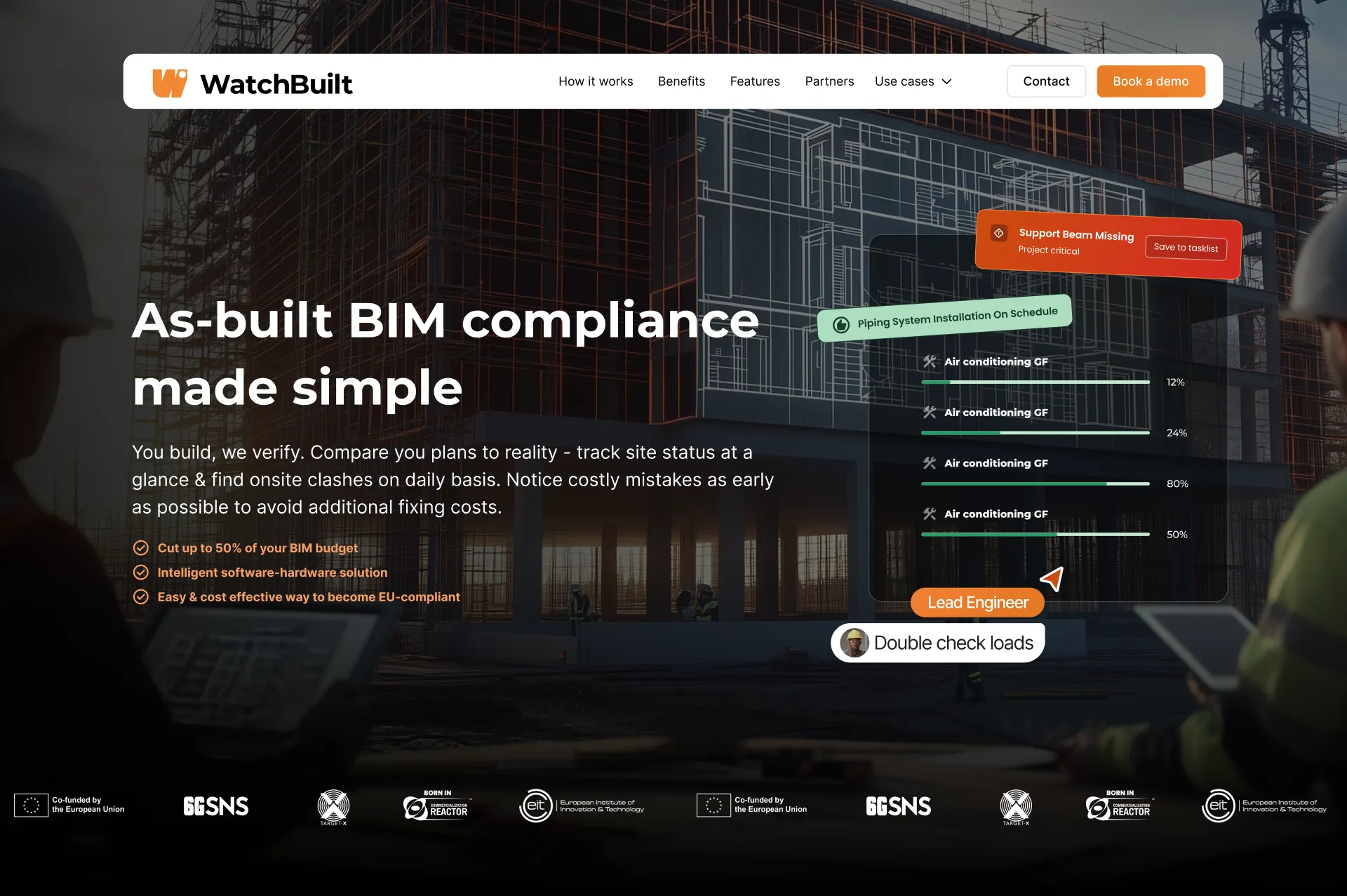
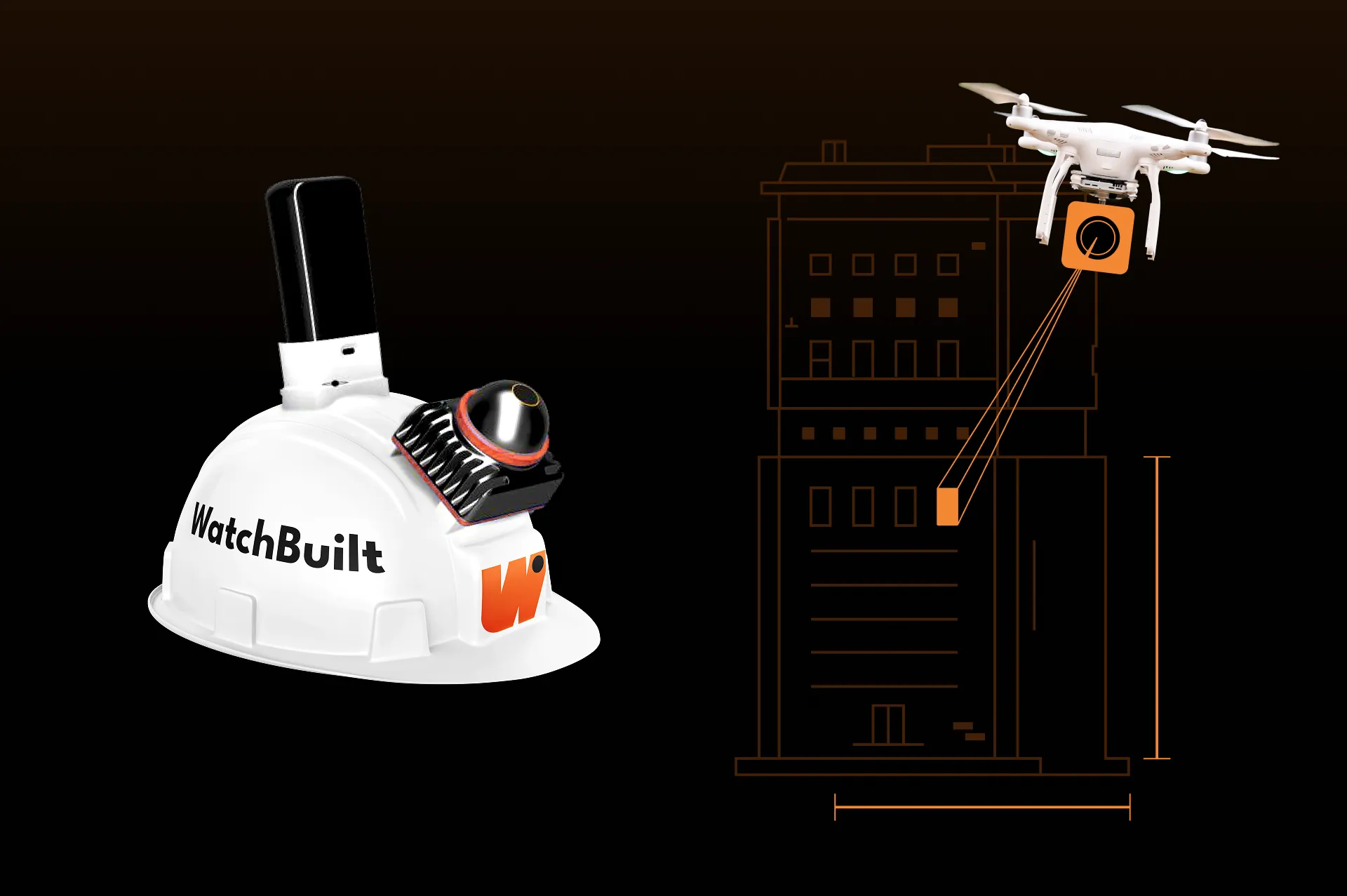
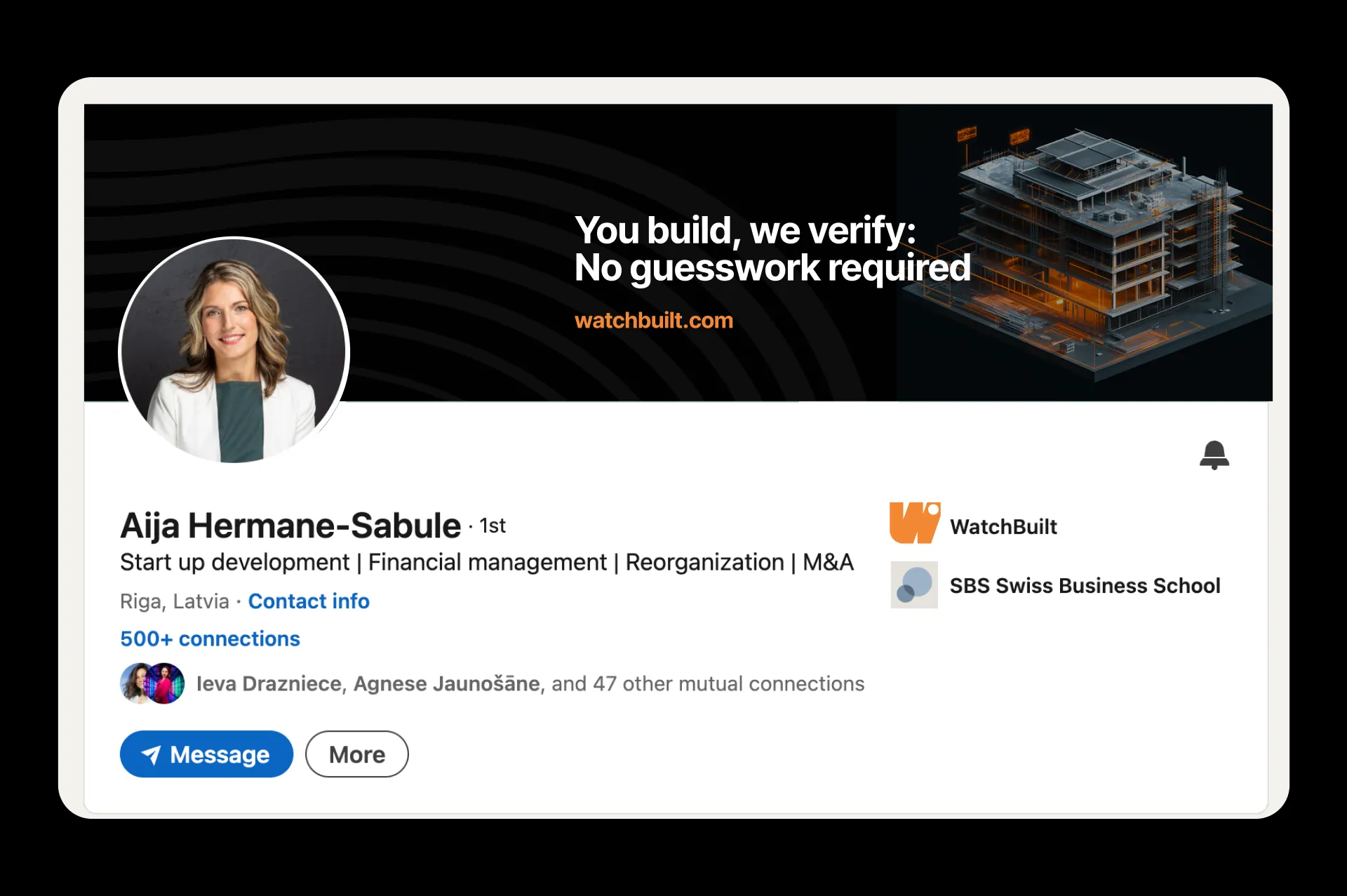
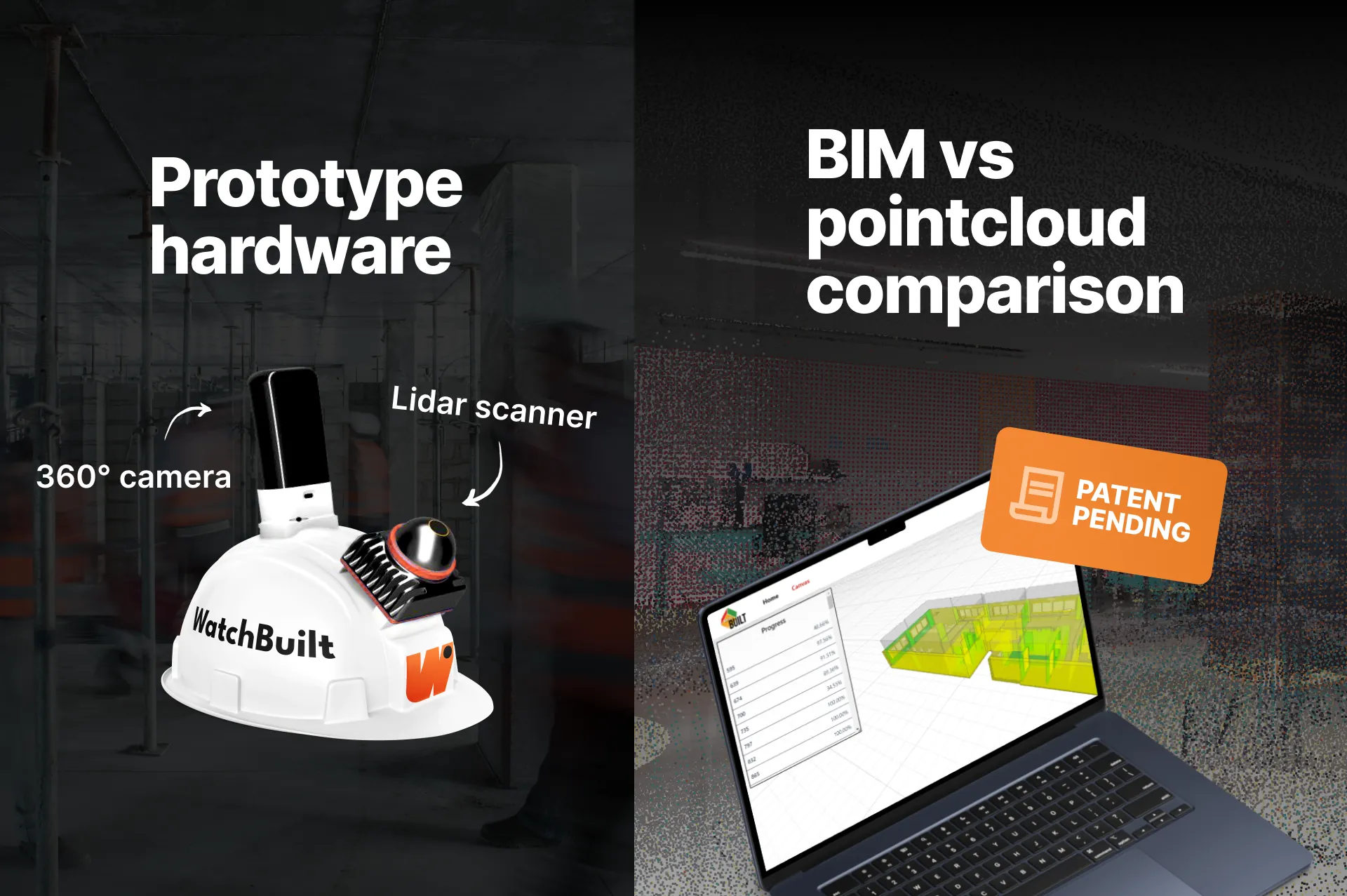
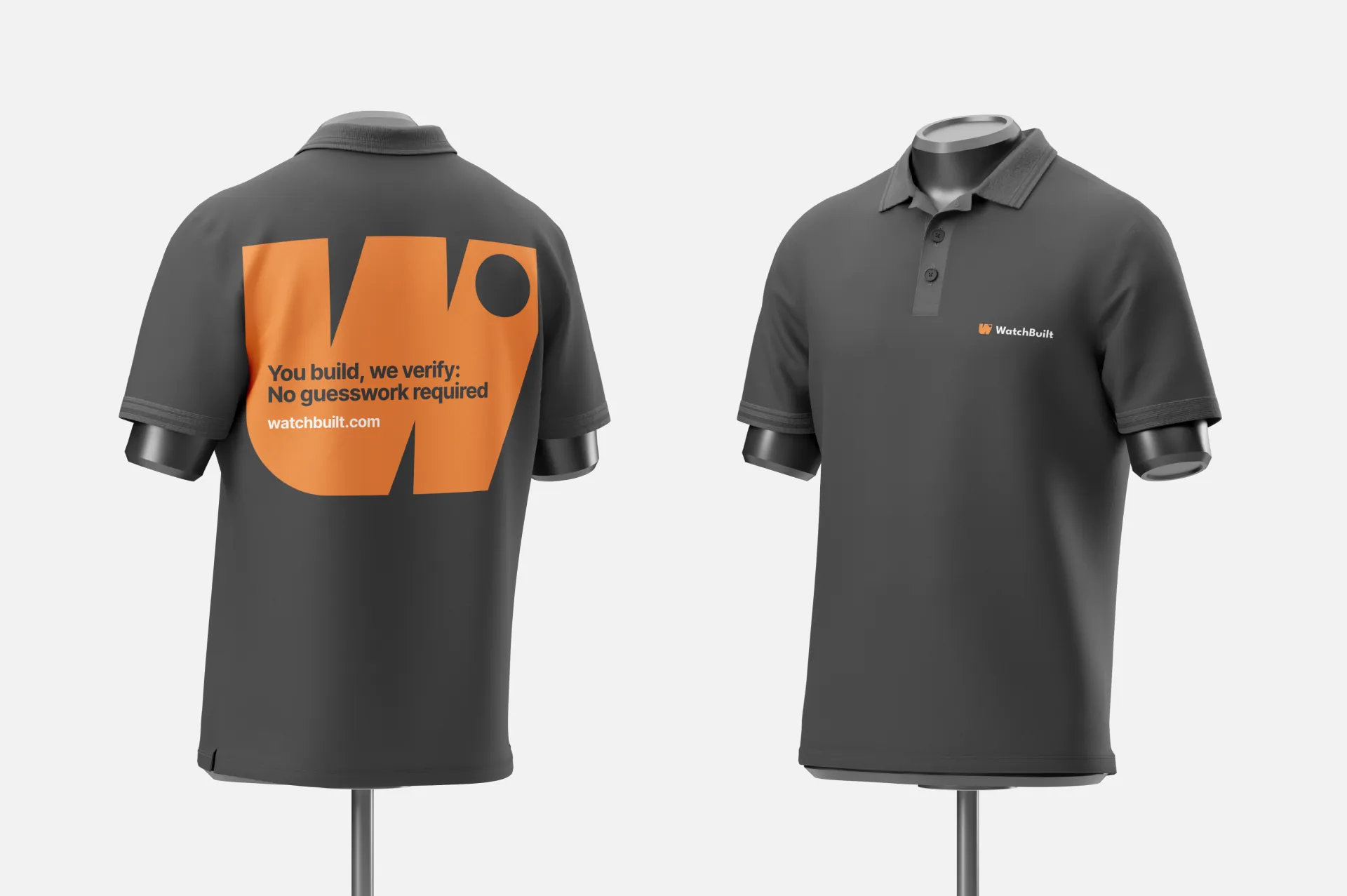
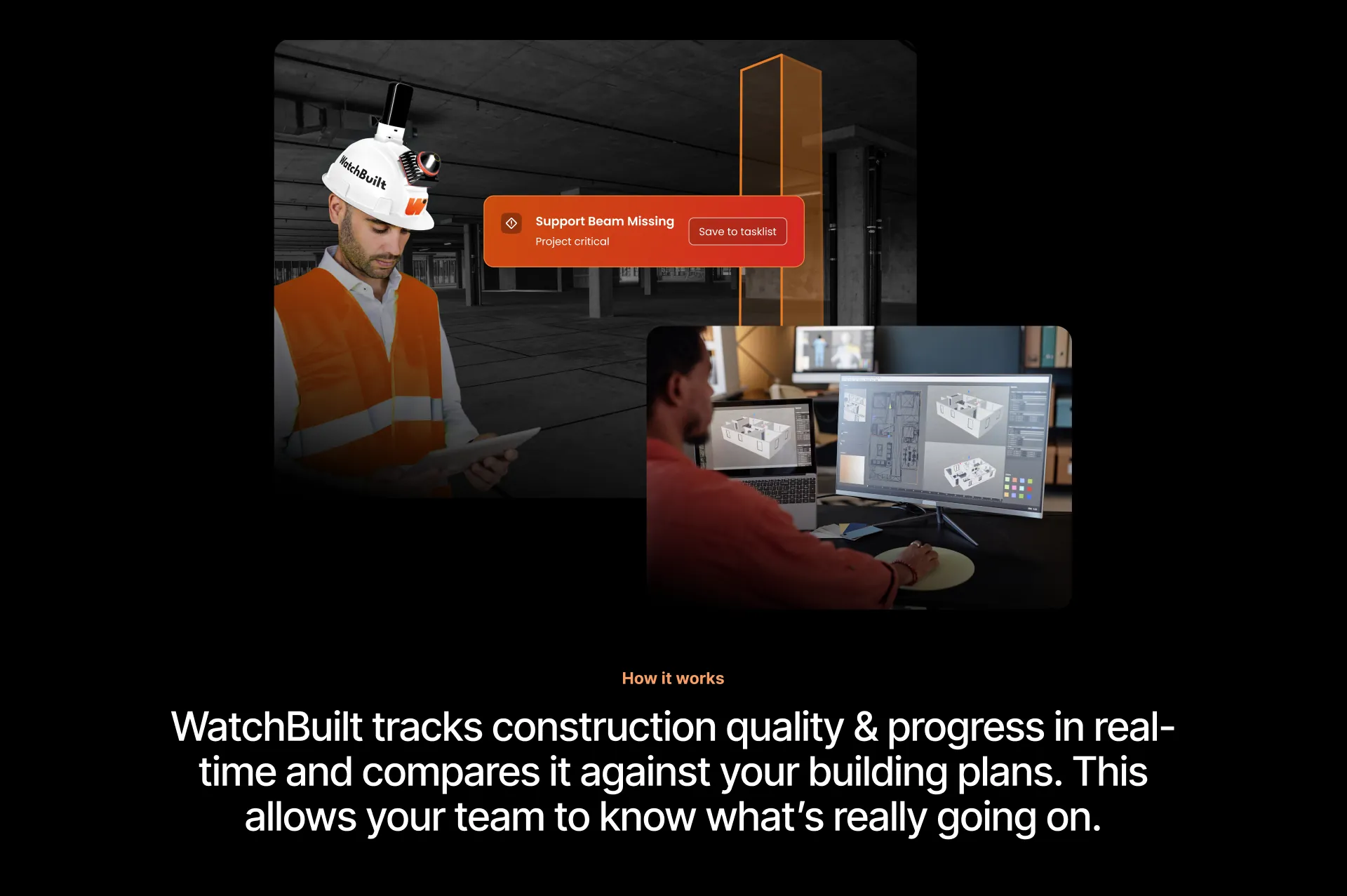
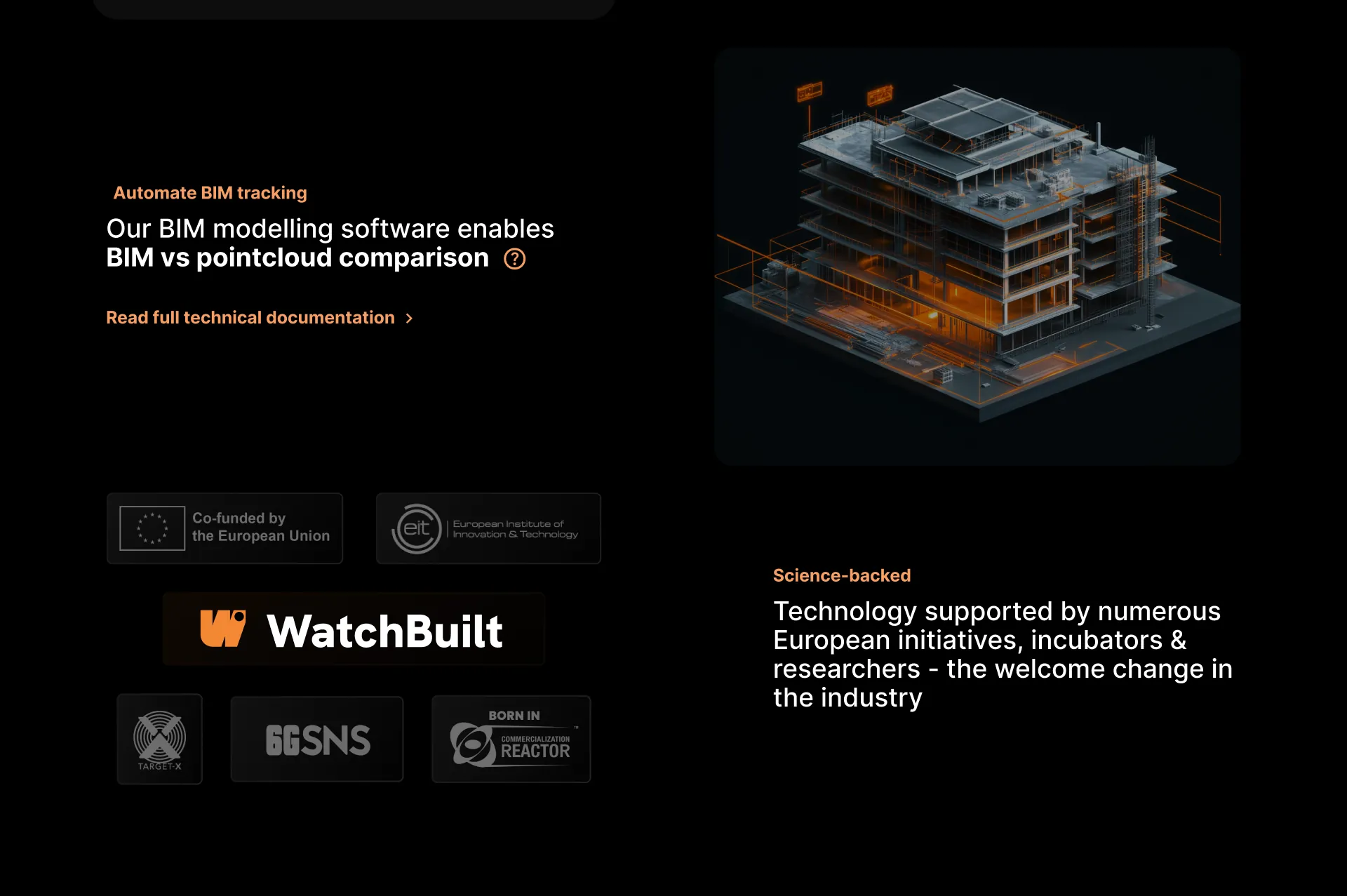
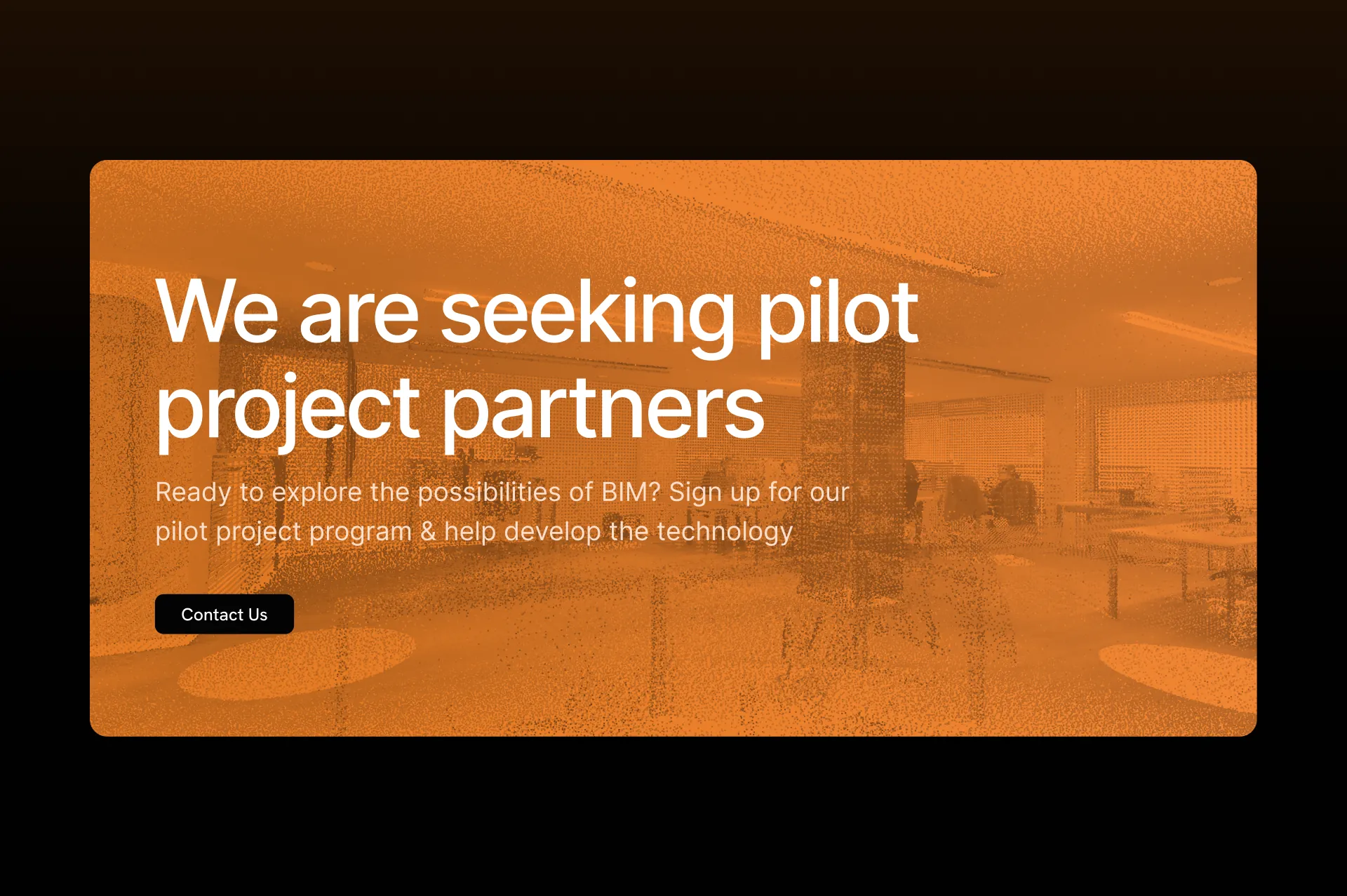
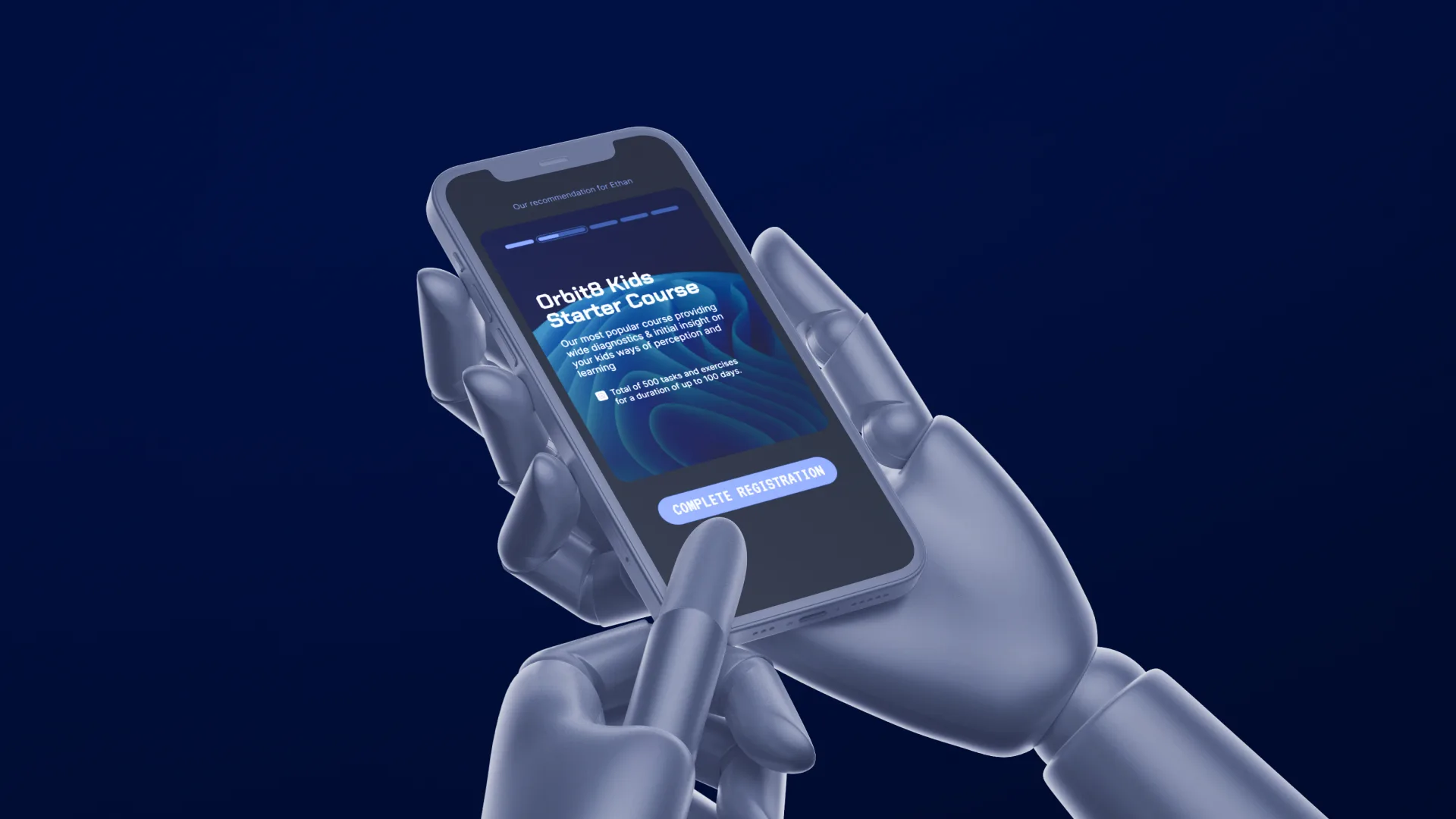
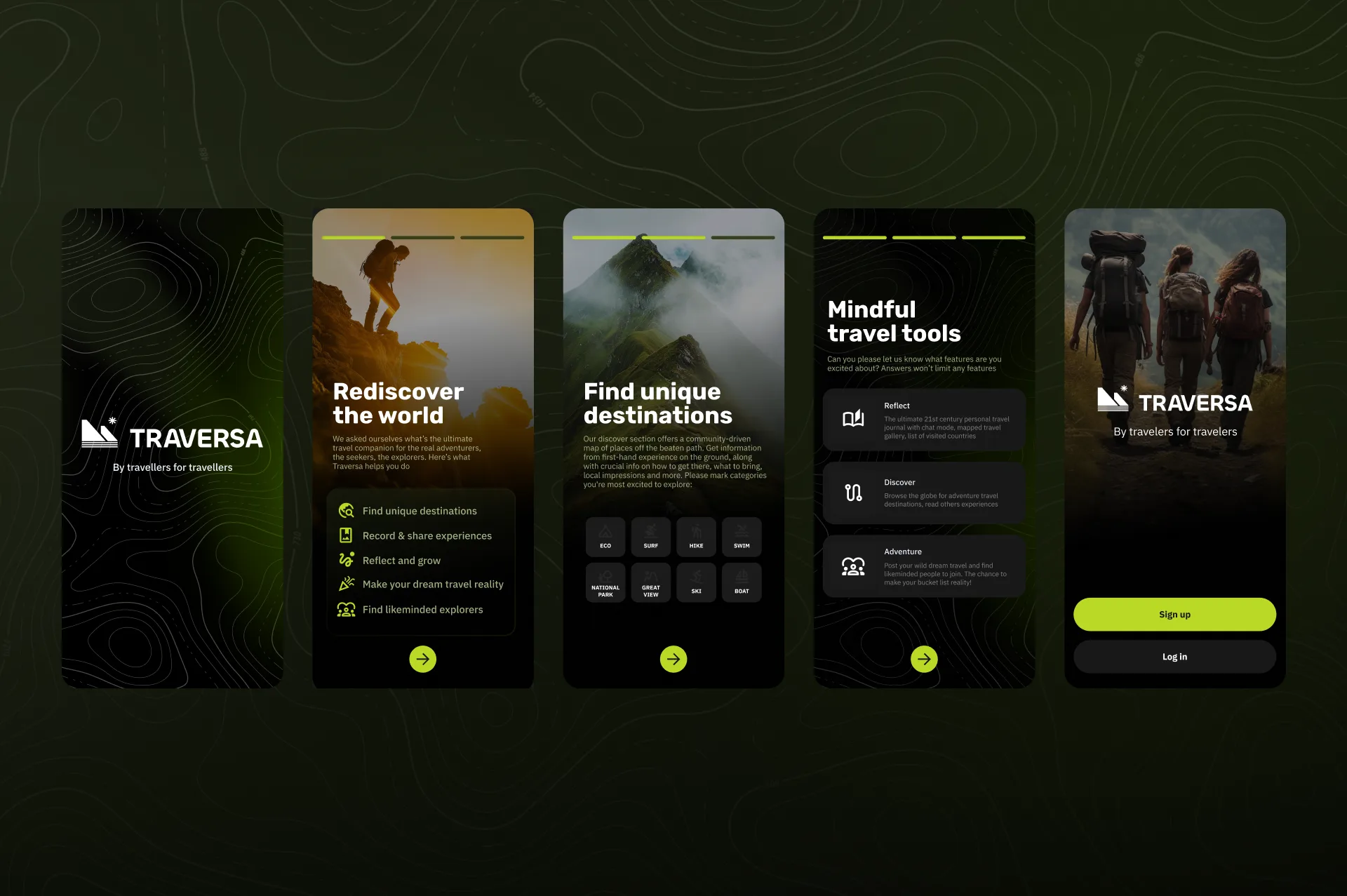
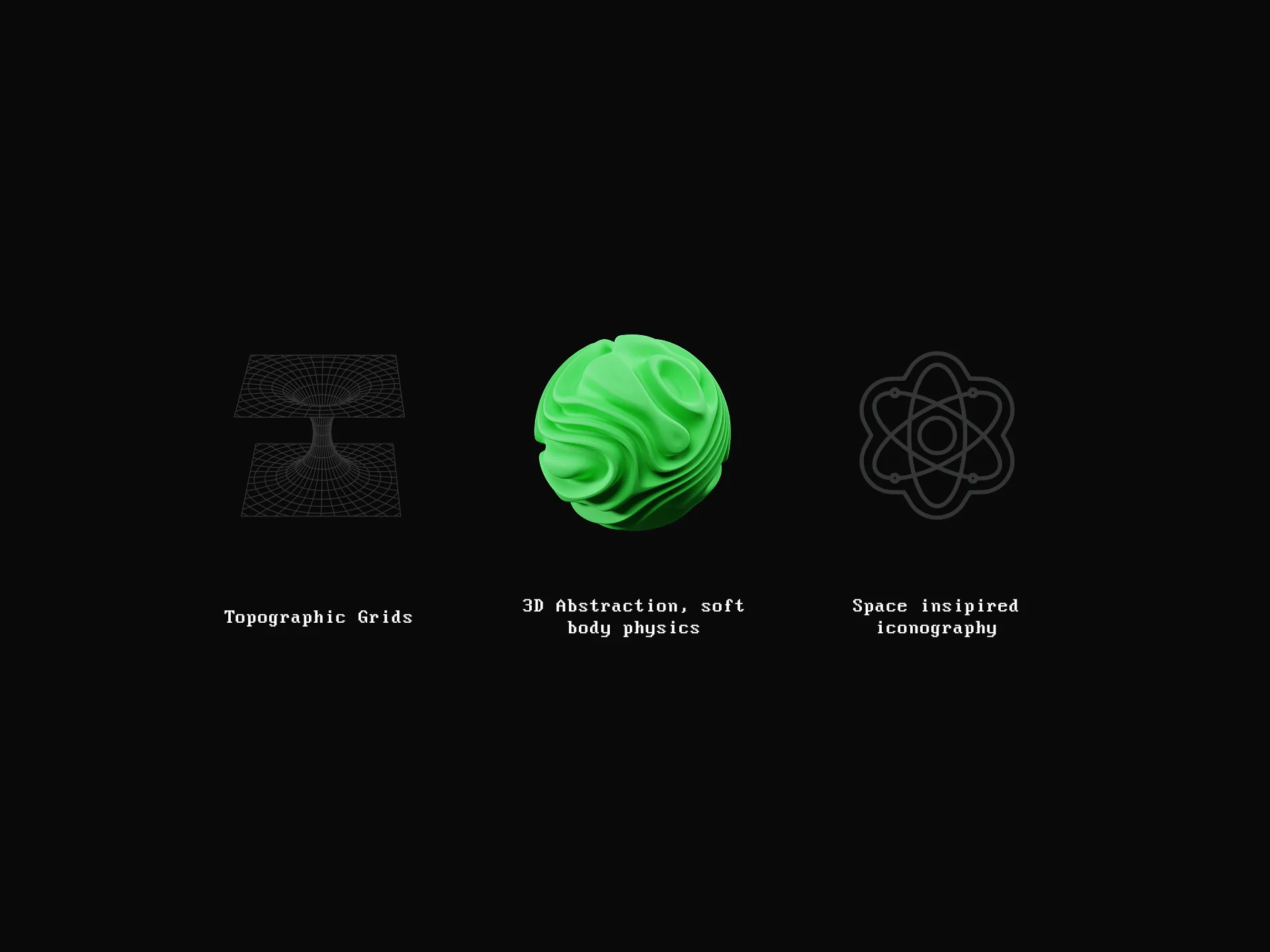
WatchBuilt's site was a Wix template — stock construction photos, walls of text, nothing that hinted at the patented BIM scanning tech underneath. Four weeks later: a visual language as ambitious as the technology itself, sharp enough to get people excited, not just informed.
Since then: WatchBuilt won the EIT Jumpstarter award and was accepted into the Commercialization Reactor deep-tech accelerator.
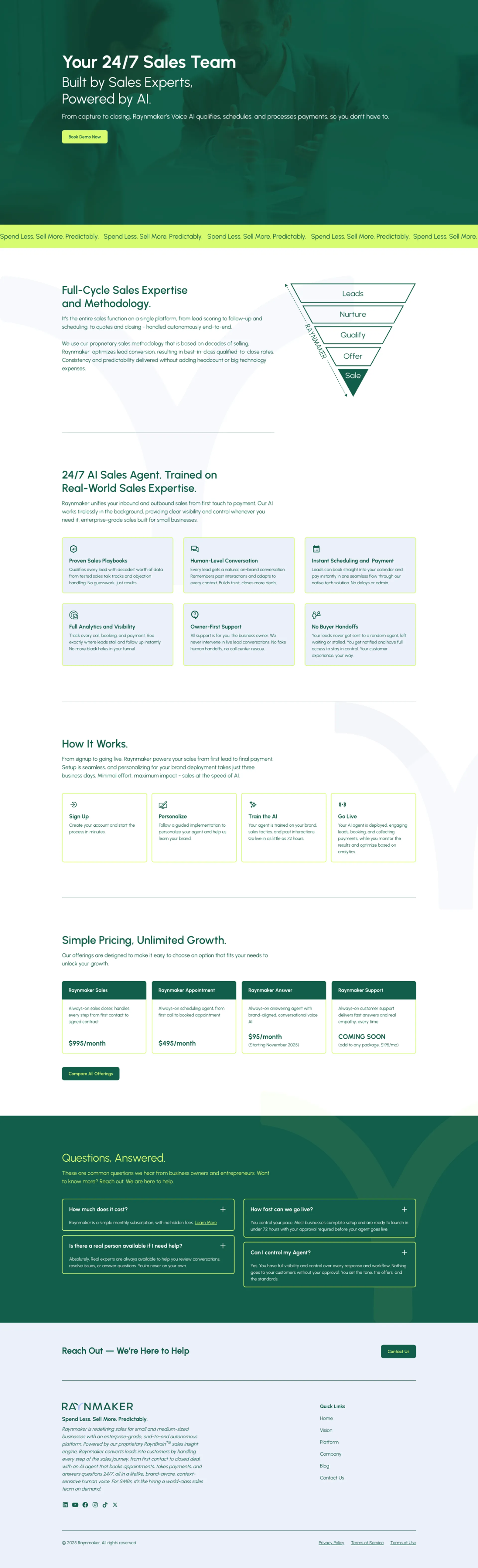
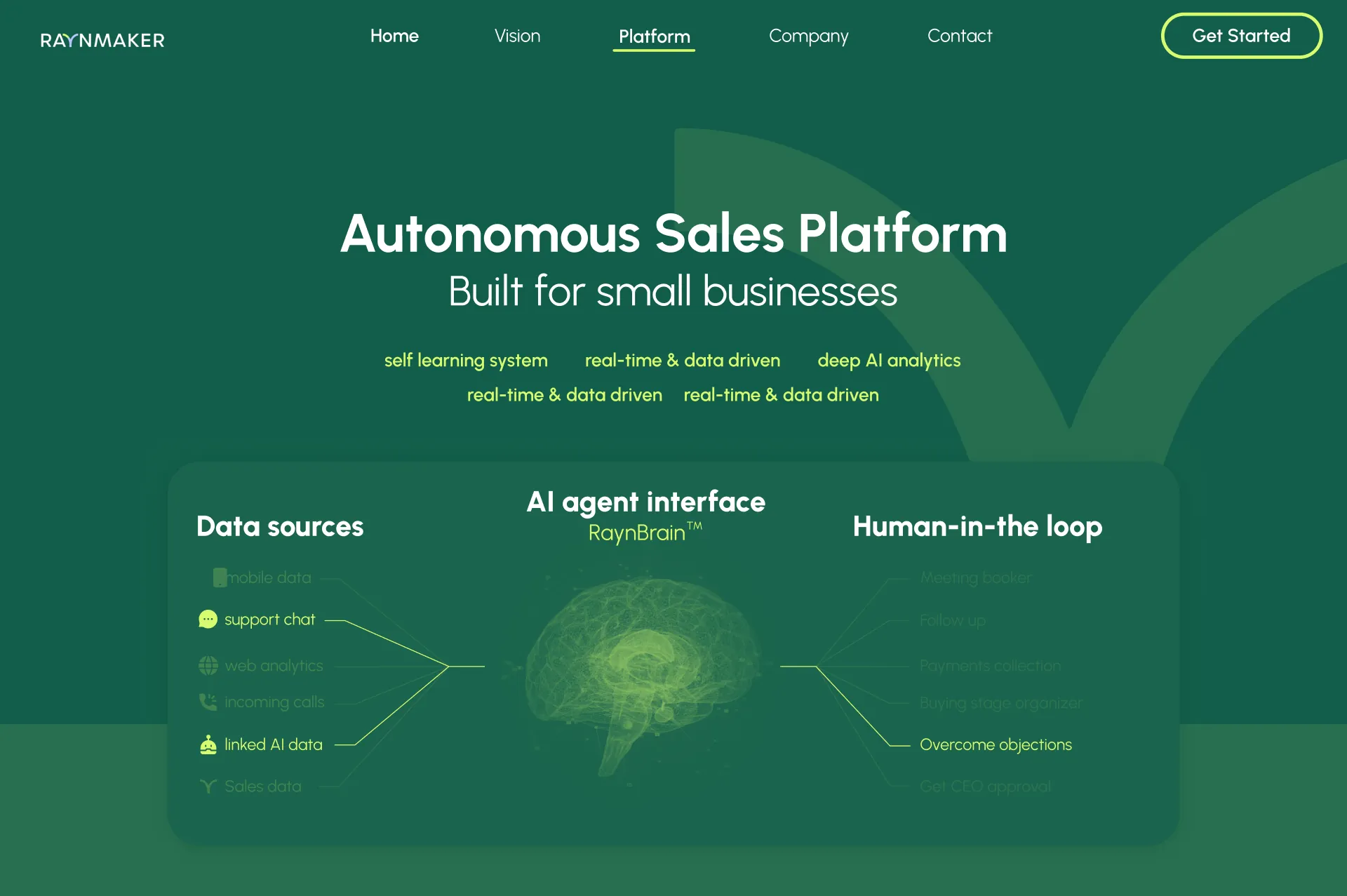
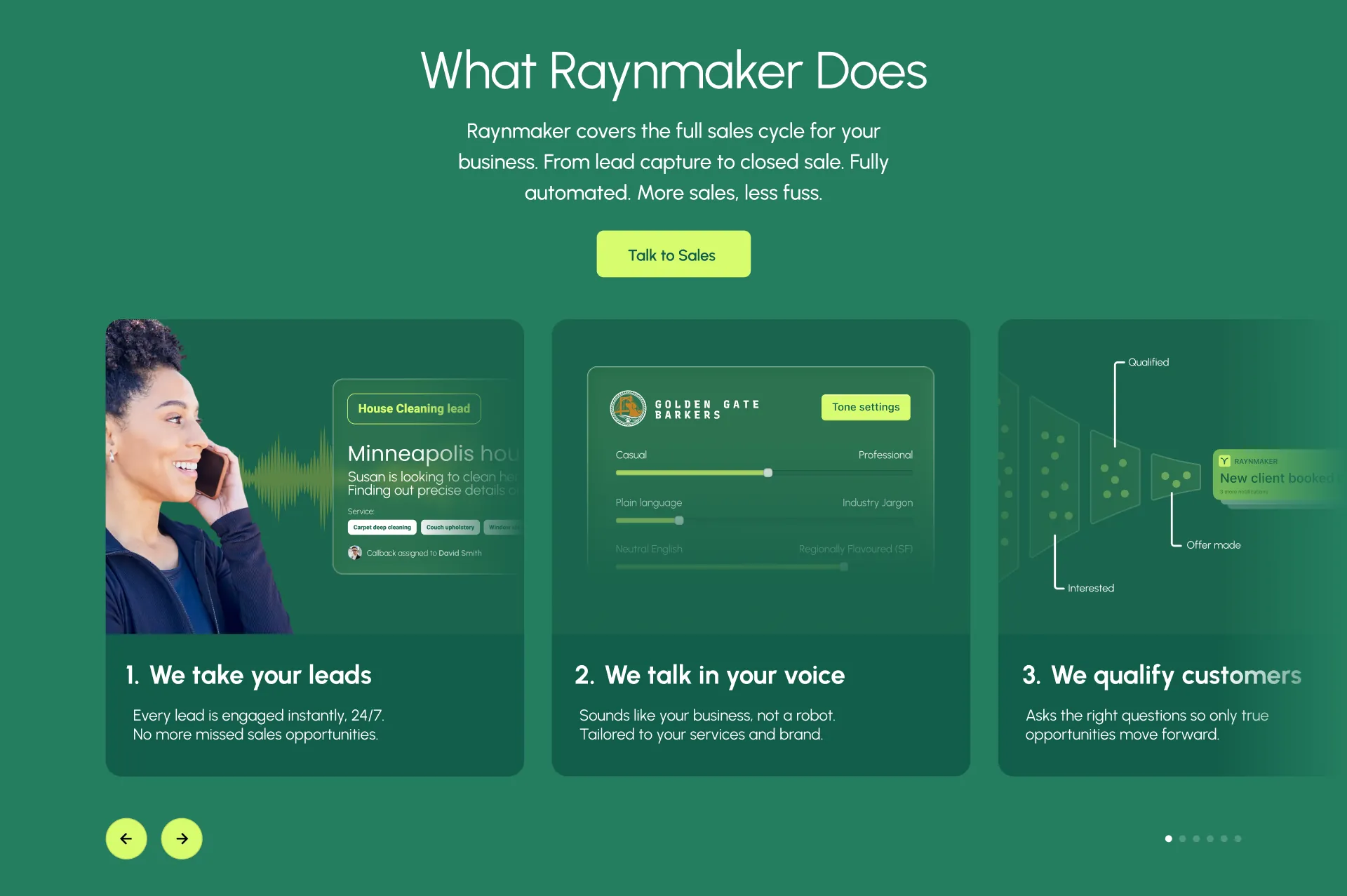
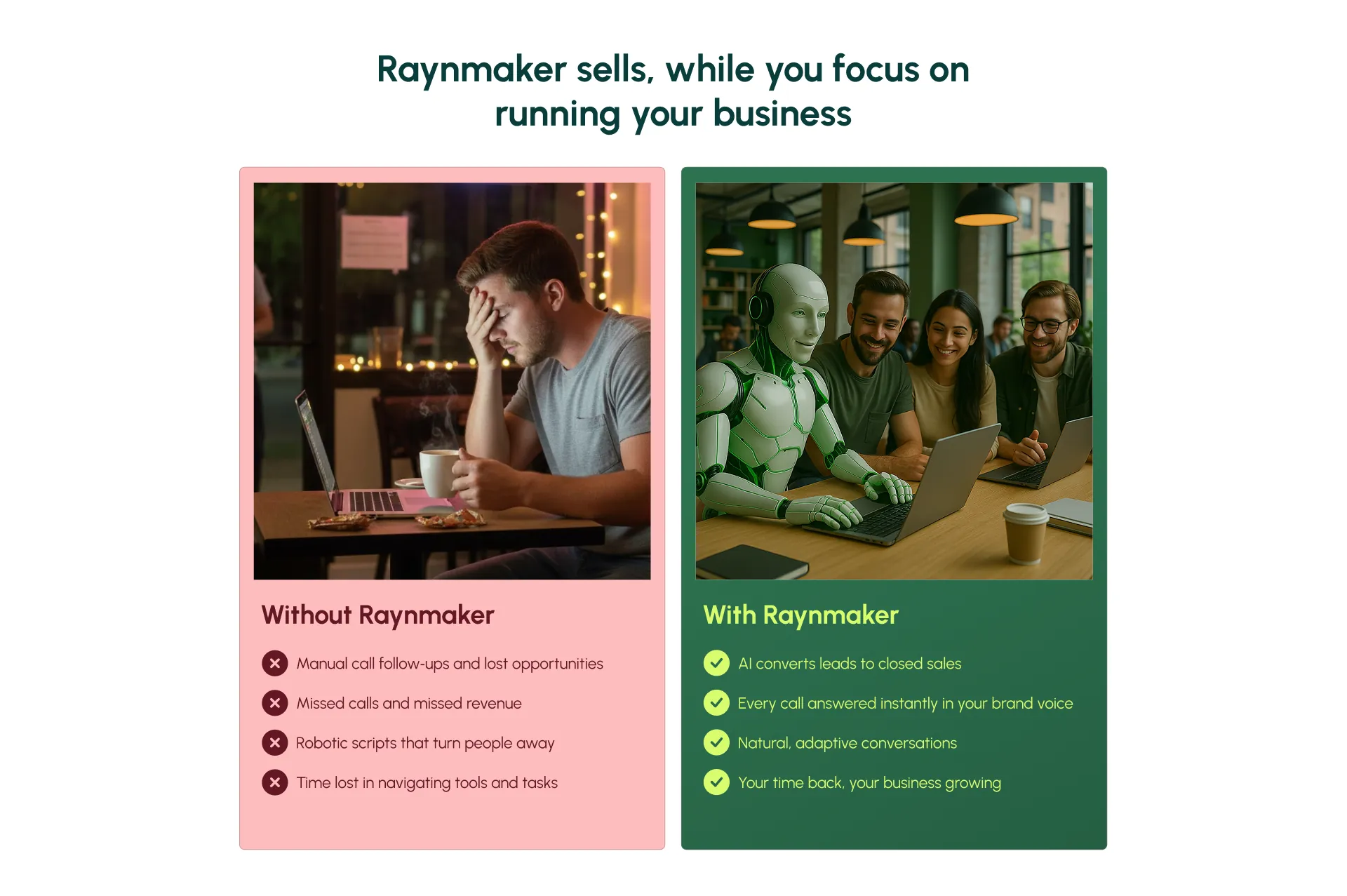
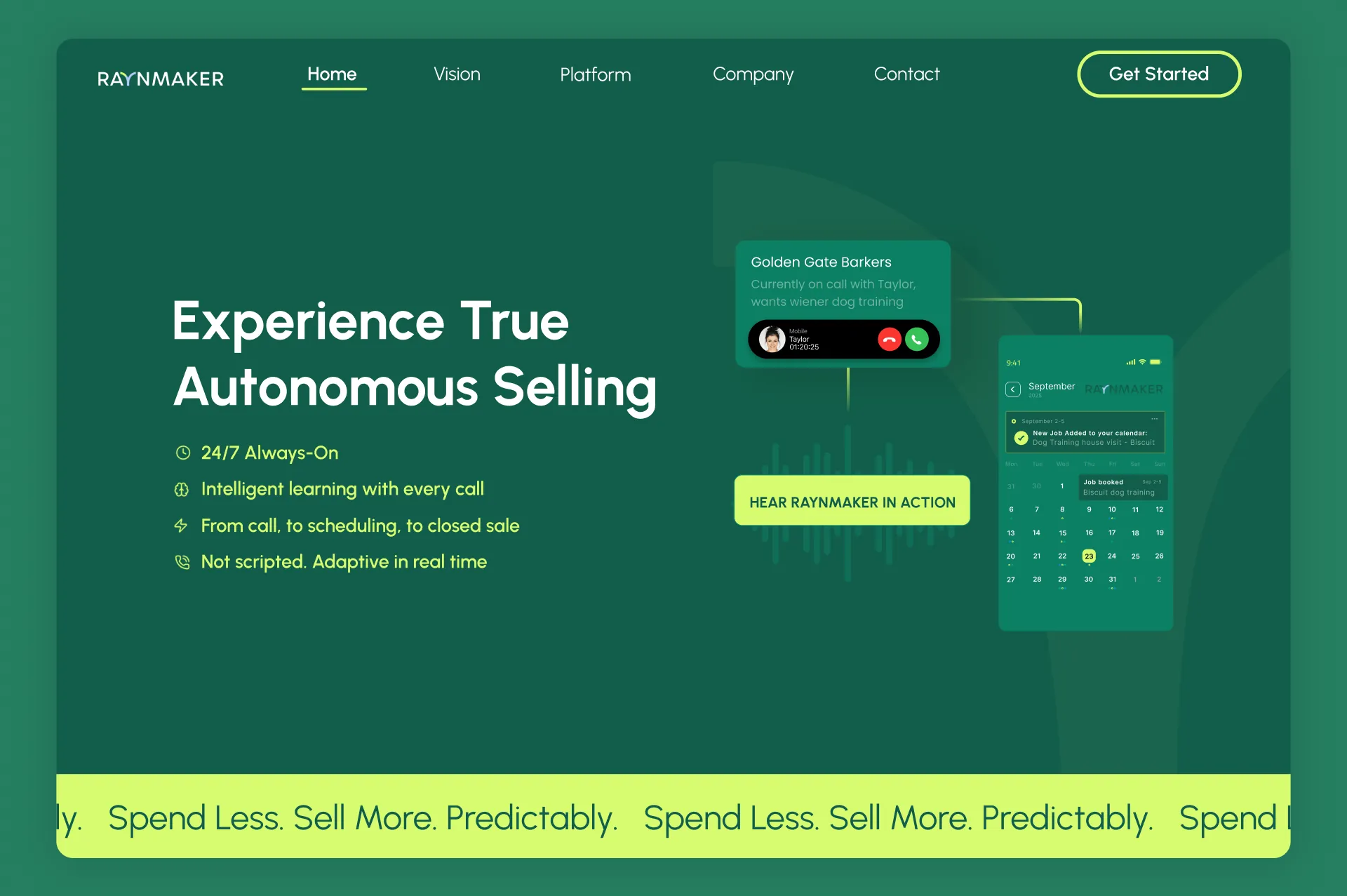
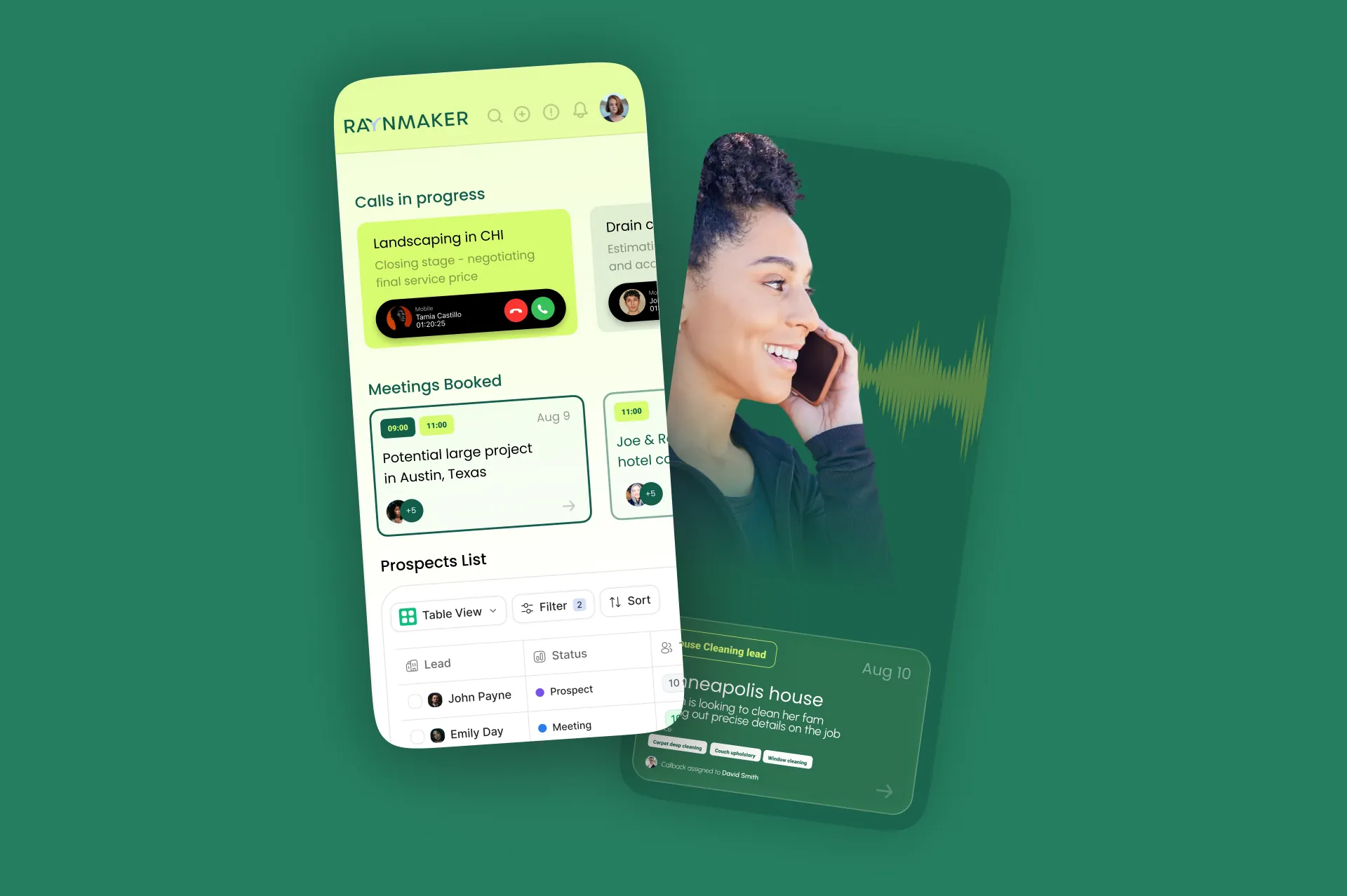
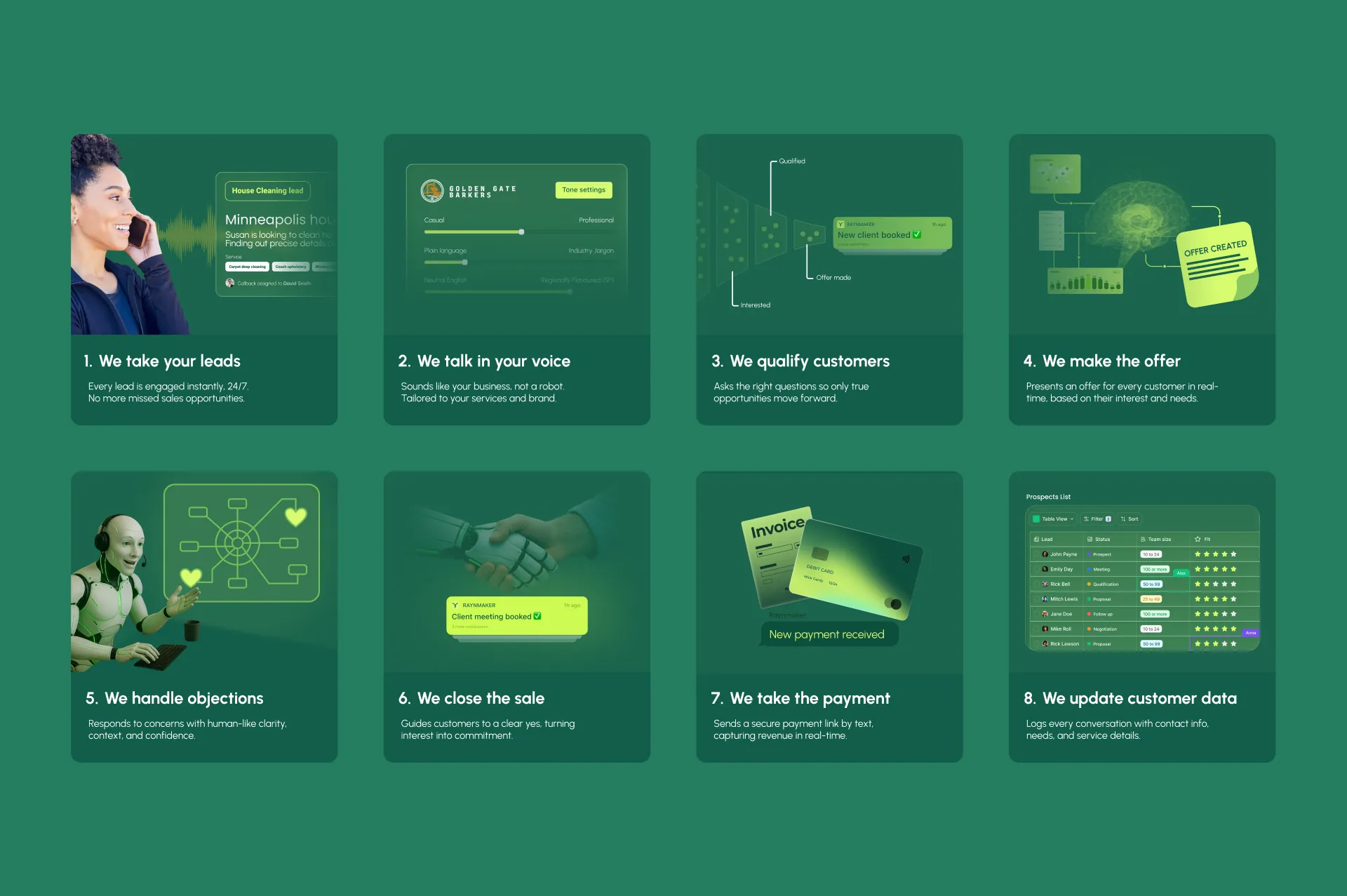
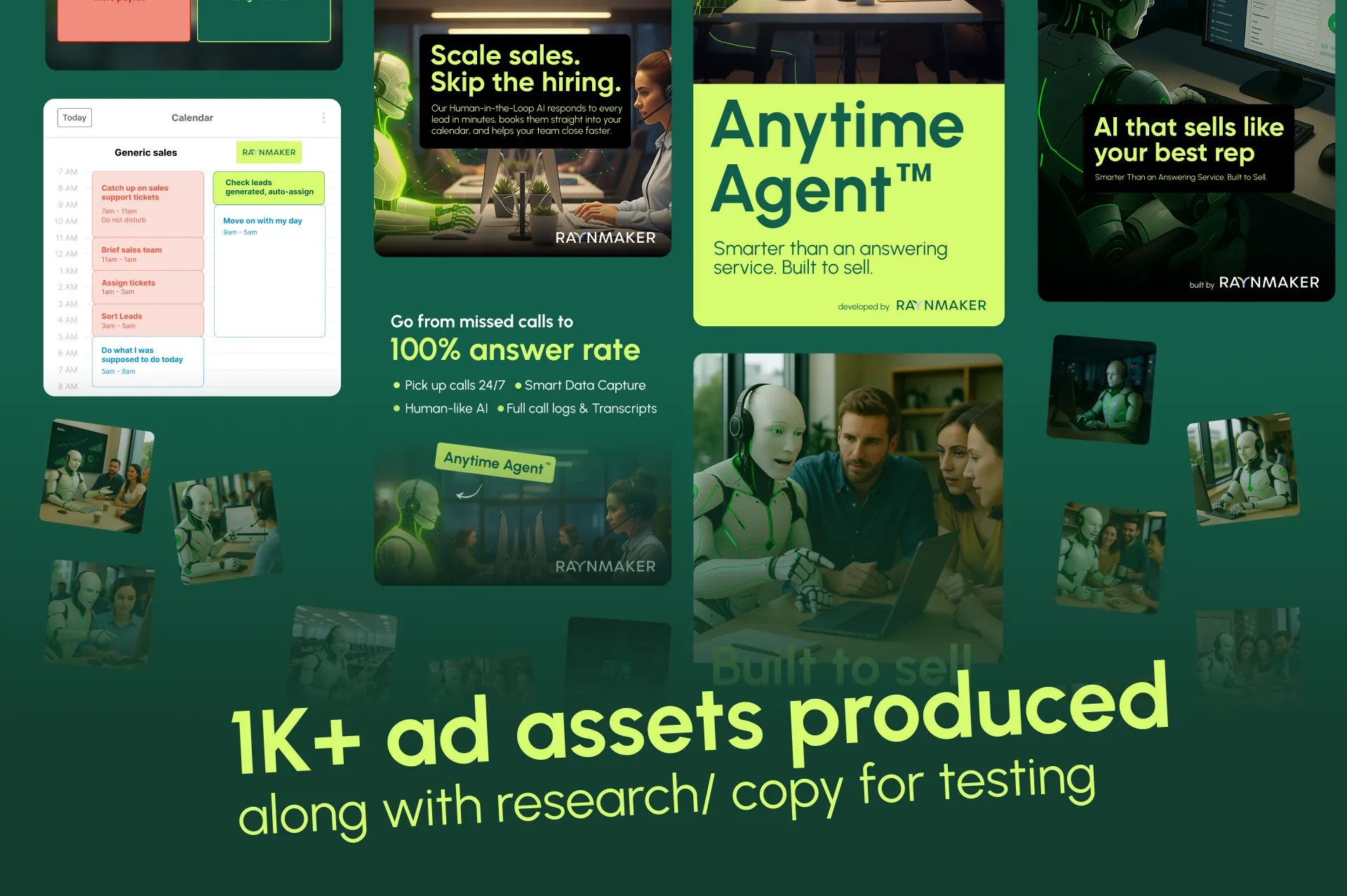
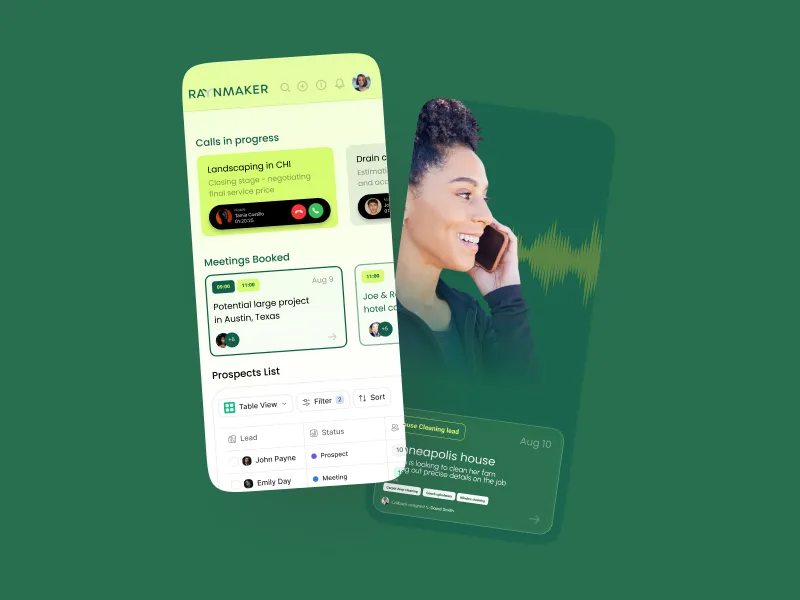
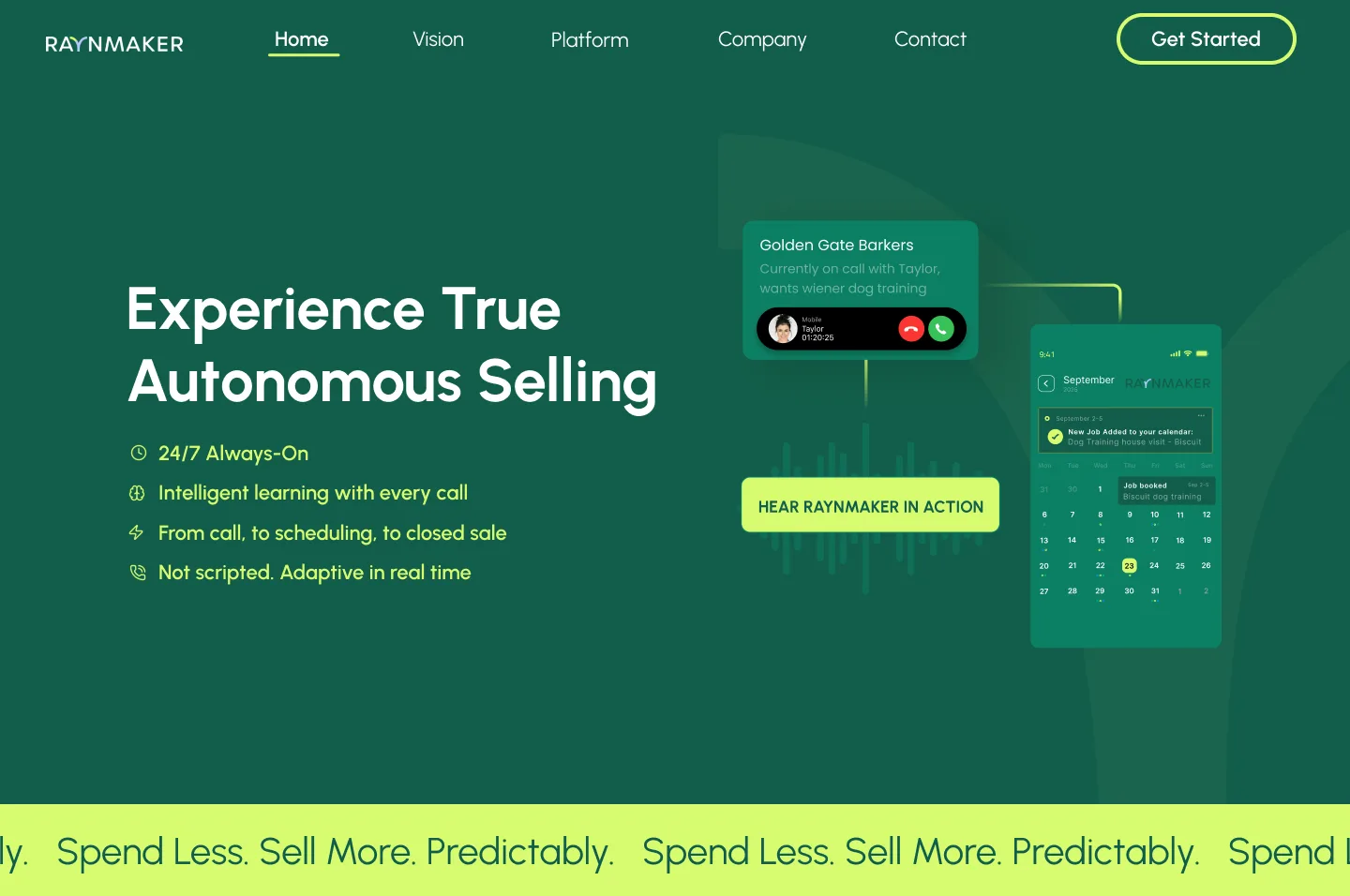
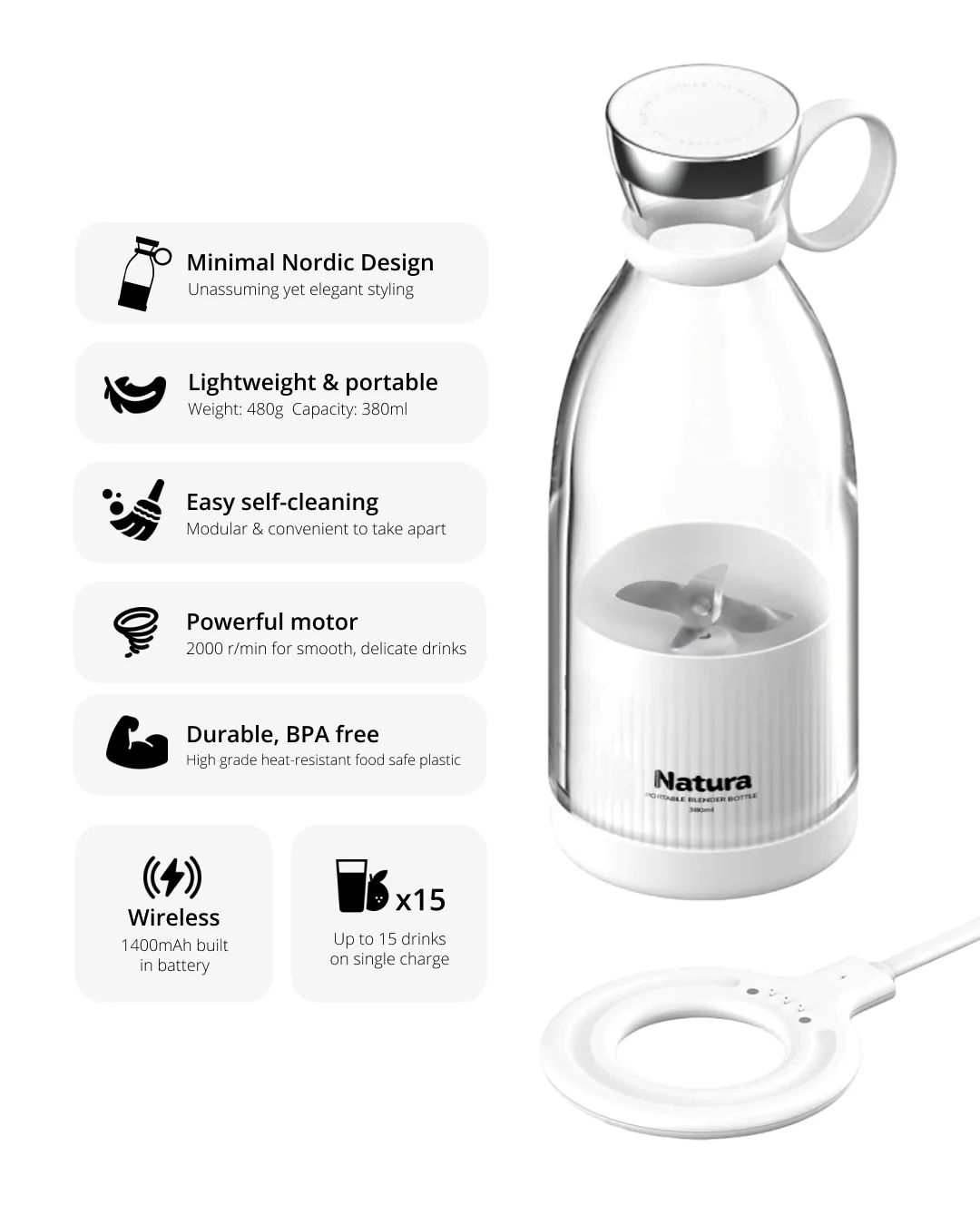
Raynmaker had a good foundation, but the site read like an AI whitepaper — dense, hard to picture in an actual business. Working with their in-house brand manager, we grounded the system in real scenes: how the product actually shows up in a client's day. Pages, illustration, video and static ads — all on the same system.
Positioning without a brand is invisible. A brand without a system falls apart the moment someone else touches it. A system without a live site is just a PDF nobody opens. That's why you get all four, together.

A clear answer to what you do and why it matters, in language your customers use — not startup-speak. Messaging framework, one-liner, full page copy.
Your website's copy, already written.
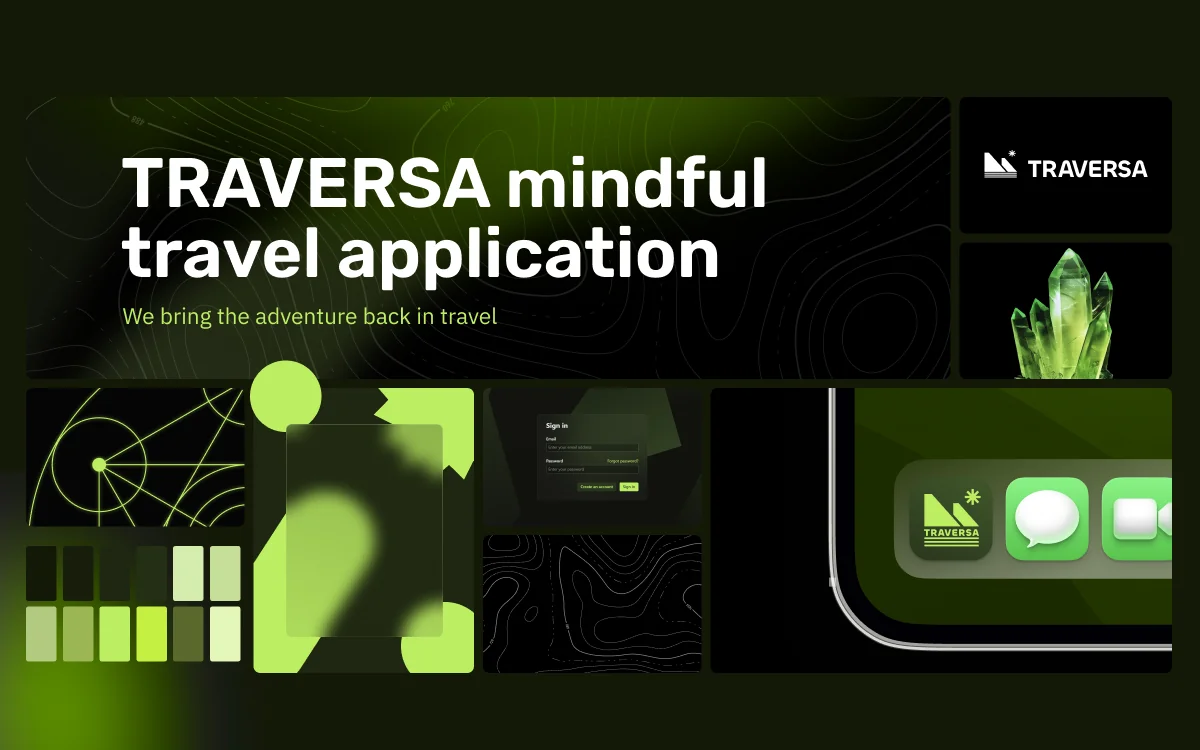
Discovery, a competitor scan, three human-crafted directions, one refined identity. Stop guessing what to do every time you need a new visual.
One identity, no more guessing.
A set of HTML and markdown files, organized so any chatbot you already use can read them and build on-brand — no plugin, no special tool required. Hosted on GitHub as one central source of truth, so nobody's re-explaining the brand or guessing at it, including you.
One source of truth, zero re-explaining.
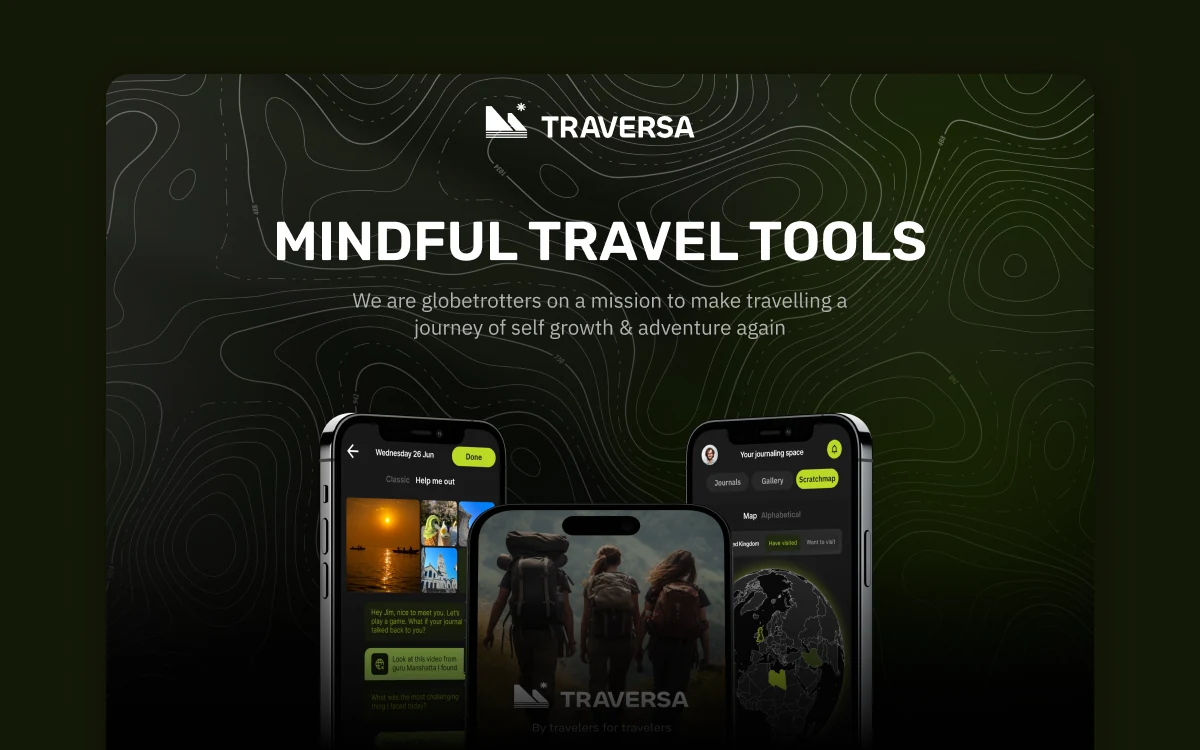
We build your best lander with what we know today — on-brand, built to convert, and the base for your most crucial touchpoints. After that, new landers or edits are one conversation away with your favorite chatbot.
New ideas, tested without a designer.
Here's what Founders say about it
Most "design systems" are a logo and two colors, frozen in a PDF nobody opens again. What you get is a living brand guide — it keeps working after launch, updated as the brand grows, readable by your team and by your AI tools.
Locked in code, not eyeballed onto a new layout each time.
The whole scale: text, backgrounds, hover states, errors, checked for contrast.
Headline, subhead, body, caption, each with a defined size and weight.
The mood, treatment, and consistency rules for photography and illustration, so new assets don't drift.
How a button behaves, not just how it looks in one screenshot.
A consistent rhythm, defined once.
So the copy sounds like you even when someone else writes it.
A spec your AI tools can read, so output comes out on-brand without you steering every prompt.
A system doesn't need to be complicated. It needs to be complete.
No handoff between a strategist, a designer, and a developer. Fewer people, fewer translation errors, faster decisions.
Checkpoint — a Loom walkthrough with the context, plus the Figma files to comment on in your own time. A call if it needs one; it usually doesn't. Three of them; everything between is work in progress.
—
15 minutes. You leave with a scope and a fixed number. No pitch.
Loom walkthroughs, async-first. Your calendar stays yours.
Files and system are yours, no lock-in.

















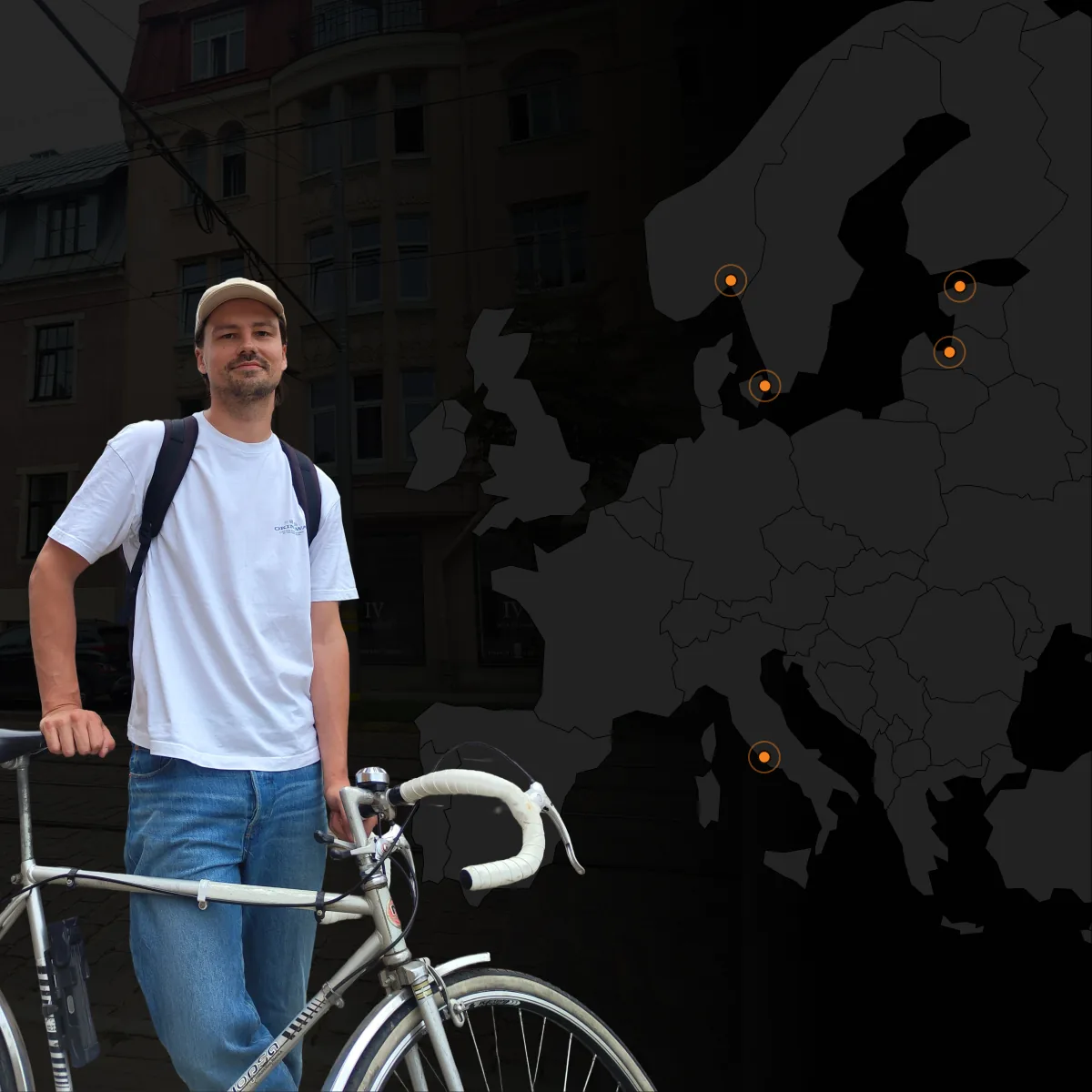
Hey, I'm Ēriks. I've spent 8+ years as a staff designer inside European fintech and SaaS startups — usually the first or second designer on the team, so I know the pace and the pressure firsthand. The last 4 were spent working one-on-one with founders on this exact problem: brand, positioning, systems that hold up. Now I'm building the AI-ready layer on top of it.
The words-and-visuals combo isn't an accident — English language and communication in Riga, multimedia design and communication in Denmark, a stretch as a copywriter in between. I combine both: writing and positioning that flow, design that makes it land.
That's the whole service now. No account manager relaying your brief to someone else, no junior handling the "small stuff" while a senior signs off from a distance. You brief me, I scope it, I build it, I ship it.
When you're operating on the maker's schedule, meetings are a disaster.
The brand, the system, the site — built once. It finishes, and you own everything in it.
Plenty of founders stop at the sprint, and that is a finished result, not a trial. Some keep me on afterwards as their design partner: a standing monthly slot for whatever comes next. New pages, ad creative, product videos, social content, all built on the system we just made, so nothing starts from a blank page again. Month to month, cancel whenever, and never a condition of the sprint.
























A logo isn't a brand. If it doesn't hold up across your deck, your site, and your investor materials, we build the system around it or start fresh — that gets sorted on the call.
The builder solves output. It doesn't solve judgment, positioning, or knowing which draft is actually yours. This sprint solves the part the builder can't.
You get three distinct directions in weeks 2-3, not one take-it-or-leave-it option. Revisions are built into the scope.
A senior designer is a six-figure commitment once you add salary and benefits, and early on you rarely have enough work to justify it. This gets you senior-level thinking for a fixed price, no idle time paid for.
No pitch — you describe the scope, you leave with a number and a date.
15-min call, no pitch. Just your scope and a number.